Thursday, February 5, 2026

Topeka zoning -

Topeka's zoning challenges reflect a broader national pattern of outdated land-use regulations that hinder modern urban vitality. Zoning ordinances emerged in the United States in the early 20th century, with New York City adopting the nation's first comprehensive zoning law in 1916. This followed tragedies like the 1911 Triangle Shirtwaist Factory fire, which exposed the dangers of mixing industrial operations with residential and commercial spaces in densely built environments. Early zoning aimed to protect public health and safety by separating incompatible uses—such as factories from homes—to reduce fire risks, pollution, noise, and urban chaos while promoting cleaner air and orderly development.

In Topeka, Kansas, zoning followed similar national trends, with codes evolving over the decades to address local needs. The city has undertaken updates, including significant revisions to zoning districts and permitted uses in 2014 and 2017, as well as more recent efforts aligned with the Downtown Master Plan and Land Use and Growth Management Plan (LUGMP 2040). However, much of the existing framework remains rooted in single-use zoning principles, where residential areas are strictly separated from commercial, office, or retail activities.

This rigidity has contributed to persistent issues. Single-use zoning dominates large portions of the city, promoting low-density sprawl, increasing reliance on automobiles, and exacerbating traffic congestion. Downtown Topeka suffers from vacant lots, underutilized parcels, and a lack of walkable, vibrant streetscapes. Restrictive provisions—such as prohibitions on ground-floor retail in residential buildings, low height limits in certain districts, and barriers to mixed-use infill—stifle innovation and redevelopment. These rules limit opportunities for compact, diverse development that could integrate housing, shops, offices, and amenities in the same block.

Reforming these outdated elements could unlock significant benefits. Allowing mixed-use projects—such as cafes, small offices, or retail on the ground floor beneath apartments or lofts—would foster economic activity, create jobs, enhance community interactions, and support a more lively urban core. Recent initiatives demonstrate momentum: the city has advanced "missing middle" housing reforms, including conditional use permits for duplexes, triplexes, and quadplexes in single-family zones, and introduced downtown mixed-use districts (D-1, D-2, D-3) to encourage compatible residential, commercial, and even light industrial integration. These steps align with shifting economic and demographic trends, where residents increasingly seek dense, walkable neighborhoods with access to amenities, rather than isolated suburban developments.

A key structural improvement would involve shifting final decision-making authority on zoning matters from the City Council to the Planning Commission. Council processes often introduce political influences, delays, and inconsistencies, whereas commissioners—equipped with professional expertise in planning, urban design, and land use—could provide more objective, evidence-based recommendations and approvals. This approach would expedite reforms, reduce bias, and prioritize long-term community welfare over short-term political considerations.

Topeka stands at a critical juncture. Clinging to rigid, early-20th-century zoning models risks continued stagnation, while thoughtful modernization could revitalize downtown, curb sprawl, improve housing affordability, and build a more sustainable, people-centered city. Now is the time to prioritize adaptable regulations that serve residents' evolving needs over entrenched rules. By embracing mixed-use flexibility and expert-led governance, Topeka can transform challenges into opportunities for a thriving future.


--
Henry McClure 
Time kills deals
785-383-9994

www.henrymcclure.live

truth

**Yes, the core events described in the post are based on a real case reported by the New York Post and other outlets.**

The New York Post article (dated February 4, 2026) titled "Career criminal creep busted for allegedly raping 14-year-old in private NYC apartment community" matches the screenshot and headline shared. It reports that 33-year-old Germaine Parham was arrested for allegedly raping a 14-year-old girl in a building in Manhattan's Stuyvesant Town (a private residential complex) on January 29, 2026. He faces charges including multiple counts of rape, robbery, kidnapping, predatory sexual assault, sex abuse, and weapon possession. He was apprehended upstate a few days later.

Parham has a significant criminal history:
- Reports cite 32 prior arrests (primarily for robberies and theft-related offenses).
- He was most recently sentenced in November 2025 to 30 days in jail for a knifepoint robbery at a CVS pharmacy in the Bronx.
- Sources indicate he was out on bail or released shortly before the alleged January 29 assault (after a more recent theft arrest in early January for stealing merchandise worth around $1,800–$1,835 from a store).

The X post by @memeticsisysyphus dramatizes and condenses the timeline for emphasis (e.g., framing the 30-day sentence as the "final" straw after 23 felonies, then a quick re-arrest for theft, release on promise to appear, and the alleged rape). While the exact number "23 other felonies" isn't universally quoted (it's often 32 prior arrests, with many being felonies like robbery/grand larceny), the overall narrative aligns: a repeat offender with violent/theft history received relatively short sentences or releases, then allegedly committed this serious crime.

This is an **alleged** crime—Parham has been charged and arrested, but not yet convicted. Multiple sources (NY Post, amNewYork, NY Daily News, PIX11) confirm the arrest, charges, and prior record details. No evidence suggests the story is fabricated.

The photo in the post (showing a man in custody) appears consistent with descriptions of Parham being escorted by law enforcement.

--
Henry McClure 
Time kills deals
785-383-9994

www.henrymcclure.live

who is who

The voter registration breakdown you provided appears to be for the **entire state of Kansas**, not specifically Shawnee County. Here's the clarification and a correct local breakdown for Shawnee County (home to Topeka) based on the most recent available official data from the Kansas Secretary of State (as of late 2025 / early 2026 sources, including November 2024 figures referenced in reports, with totals around 118,000–120,000 active voters).

### Shawnee County Voter Registration Breakdown
- **Total Registered Voters**: Approximately **118,730** (as of November 1, 2024; recent monthly updates from the KS Secretary of State show similar figures in the 118,000–120,000 range, excluding inactive/moved/deceased).
- **Party Breakdown** (major parties and unaffiliated):
  - **Democratic**: 36,171 (~30.5%)
  - **Republican**: 44,467 (~37.4%)
  - **Unaffiliated**: 36,471 (~30.7%)
  - **Libertarian**: 1,399 (~1.2%)
  - **No Labels Kansas**: 196 (~0.2%)
  - **United Kansas**: 26 (minimal)
  - **Other/minor parties**: Small numbers not always broken out separately.

Shawnee County leans slightly Republican overall but is more balanced/competitive than many rural Kansas counties, with a significant unaffiliated bloc and a stronger Democratic presence due to Topeka (the state capital) and urban/suburban demographics. It's often classified as a "New Democratic" or battleground-leaning county in broader analyses.

### Comparison to Statewide Kansas (your provided numbers)
Your figures match statewide totals closely (around 1.79 million active voters):
- Democrats: ~24.85% (445,918)
- Republicans: ~45.35% (813,675)
- Unaffiliated: ~28.62% (513,421)
- Libertarian: ~1.13% (20,263)
- Other/Unknown: Minimal

Kansas as a whole is strongly Republican-leaning, but Shawnee County is more moderate/mixed.

### Additional Context
- **Newly Registered**: Statewide figures like the 18,526 you mentioned likely refer to a recent period (e.g., post-election surge or monthly update). County-specific new registrations aren't always broken out publicly but can be requested from the Shawnee County Election Office.
- **Households**: The 1,202,984 figure is statewide (Kansas has roughly that many households per census data).
- **Source Notes**: Official stats come from the Kansas Secretary of State (sos.ks.gov/elections), updated monthly. Shawnee County Election Office (snco.gov/election) provides local reports, including precinct-level details upon request. Numbers fluctuate slightly with purges, new registrations, and inactives.

If you have a specific date/source for the numbers you shared or want precinct-level details, historical trends, or comparison to past elections, let me know! Truth: The county is **not** as heavily Republican as the state average.

--
Henry McClure 
Time kills deals
785-383-9994

www.henrymcclure.live
Fwd: KS EVUS Voter File Update


---------- Forwarded message ---------
From: Marc Zdanow <marc.zdanow@engagevoters.us>
Date: Thu, Feb 5, 2026 at 9:58 AM
Subject: KS EVUS Voter File Update
To: <mcre13@gmail.com>


Dear Henry,
 
We've just completed our latest update to Kansas's EVUS Voter File, including new registrants and newly added vote history for 2025 Primary, Local and General Elections as well as newly registered voters. Reply to this email or book a time to get specific detail for any district in the state. We'll also prepare our Campaign Snapshot Report upon request.


Kansas

Total voters excluding moved/deceased: 1,794,209 

Total households: 1,202,984

Newly Registered: 18,526


Party registration breakdown:

  • Democrats: 445,918 (24.85%)

  • Republicans: 813,675 (45.35%)

  • None (Unaffiliated): 513,421 (28.62%)

  • Libertarian: 20,263 (1.13%)

  • Unknown: 932 (0.05%)

Voter Profiles:

  • Persuadable voters: 991,799 (55.28%)

New vote history included in this update:

  • 2025 Local

    • Unique Individuals: 405,944
    • Unique Households: 292,523

Recent turnout context (statewide file):

  • 2024 General: 1,247,415 (69.52%)

  • 2024 Primary: 313,902 (17.50%)

  • 2022 General: 912,273 (50.84%)

  • 2022 Primary: 851,396 (47.45%)

  • 2020 General: 1,154,416 (64.34%)

  • 2020 Primary: 532,801 (29.70%)

Modeled data included:

  • Likely married: 615,845 (34.33%

  • Ethnicity: 1,600,412 (89.20%)

  • Estimated income: 1,328,655 (74.05%)

  • Education: 777,389 (43.33%)

  • Homeowners: 1,079,587 (60.17%)

Again, just reply to this email or book a time to get specific detail for any district in the state. We'll also prepare our Campaign Snapshot Report by request.

Thank you,


Marc


Engage Voters US, 25 Broadway, 10th Floor, New York, NY 10004, USA, (833) 354-1705

Unsubscribe Manage preferences


--
Henry McClure 
Time kills deals
785-383-9994

www.henrymcclure.live

Wednesday, February 4, 2026

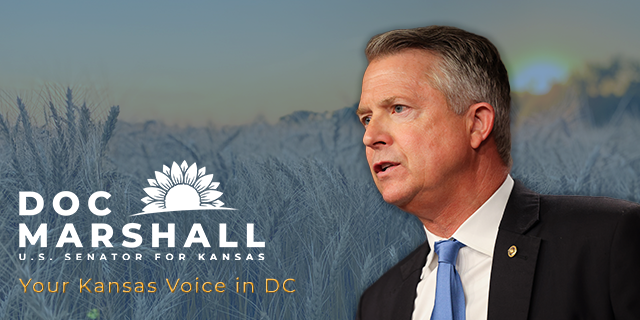
Fwd: Senator Marshall Announces Drug Trafficking Reduction Funding


Henry McClure  
785.383.9994
sent from mobile 📱
time kills deals

---------- Forwarded message ---------
From: Senator Roger Marshall <donotreply@marshall.senate.gov>
Date: Wed, Feb 4, 2026, 3:55 PM
Subject: Senator Marshall Announces Drug Trafficking Reduction Funding
To: <mcre13@gmail.com>


Image

Visit Our Website Newsletter Sign-Up

Senator Marshall Announces Drug Trafficking Reduction Funding

I was proud this week to help secure $298 million for the HIDTA program in this year's government funding bill. This program brings together federal, state, local, and tribal law enforcement so they can better coordinate efforts to stop major drug trafficking operations.

Here in Kansas, 14 counties are designated as HIDTA areas, meaning they face significant drug trafficking activity. The impact of this crisis is real for our state. In 2024 alone, Kansas lost 661 lives to drug overdoses — a heartbreaking reminder that this fight is about protecting our families, our neighbors, and our communities.

HIDTA initiatives are already making a difference. Last year in Kansas, these efforts led to the seizure of more than 57,000 grams of fentanyl, nearly 200,000 fentanyl pills, and over 950,000 grams of methamphetamine. Every shipment taken off the streets is one less threat to a Kansas family.

Drug trafficking doesn't just bring illegal substances into our state — it fuels violence, crime, and addiction that tear at the fabric of our communities. Supporting law enforcement with the tools and coordination they need is a critical step in keeping Kansas neighborhoods safe and giving families hope for a healthier future.

I will continue working to ensure our law enforcement officers have the resources they need to stop traffickers and protect the people of Kansas.

Click HERE to sign up for my newsletter!

Unsubscribe

Topeka
800 SW Jackson Street, Suite 600
Topeka, KS 66612
Phone: 785-414-7501

Overland Park
7011 W. 121st Street, Suite 100
Overland Park, KS 66209
Phone: 913-879-7070

Pittsburg
402B North Broadway
Pittsburg, KS 66762
Phone: 620-404-7016

Salina
204 S. Santa Fe Avenue, Suite 1
Salina, KS 67401
Phone: 785-829-9000

Garden City
921 Lareu Street, Suite C Garden City, KS 67846
Phone: 620-765-7800

Wichita
100 S. Market, Suite 102 Wichita, KS 67202
Phone: 316-803-6120

Kansas City
400 State Avenue
Suite 1006
Kansas City, Kansas 66101
Phone: 913-549-1570

Washington D.C.
Russell Senate Office Building Suite 479A
Washington, DC 20510
Phone: 202-224-4774

image
image