Wednesday, March 18, 2026

Watch "The BEST shot in golf history" on YouTube

https://youtube.com/shorts/IhmS2FBw7uw?si=X7Km1XnJ8P48TR6E


Henry McClure  
785.383.9994
sent from mobile πŸ“±
time kills deals

Watch "Joe Rogan Reacts to the U S Secret Weapon πŸ’€πŸ‡ΊπŸ‡Έ #Shorts" on YouTube

https://youtube.com/shorts/NXLo_ucVwr4?si=8CNqBD3D4ALWmyMS


Henry McClure  
785.383.9994
sent from mobile πŸ“±
time kills deals

Blogger: User Profile: mcre Media

Blogger: User Profile: mcre Media https://share.google/fhoRwrs8TWn80VGRC


Henry McClure  
785.383.9994
sent from mobile πŸ“±
time kills deals

MCRE

Based on a recent LinkedIn post, Topeka real estate broker Henry McClure advises property practitioners to always prepare their clients by using broker cooperation agreements. He emphasizes that these agreements are crucial for ensuring smooth real estate transactions, according to his post on LinkedIn (https://www.linkedin.com/posts/henry-mcclure-2b562414_broker-cooperation-agreements-an-individual-activity-7293292485949235202-sc8t). McClure, who founded MCRE, LLC in 2000, provides daily updates on local news and economic developments in Topeka. [1, 2, 3]  
Key Takeaways from Henry McClure's Advice: 

• Preparation: Always prepare clients for transactions, according to this LinkedIn post. 
• Agreement Usage: Utilize broker cooperation agreements to protect interests, notes this LinkedIn post. 
• Transaction Focus: The advice is specifically aimed at real estate practitioners. [1]  

This LinkedIn post also notes that such, as noted in this LinkedIn post. [1]  
Would you like more information on the specific types of real estate transactions he mentioned? 

AI can make mistakes, so double-check responses


Henry McClure
785.383.9994 

Sent from my T-Mobile 5G Device
Get Outlook for Android

How could 186 vote NO?

Yes, the post is based on a real event. The U.S. House of Representatives did pass a bill on March 18, 2026, called the Deporting Fraudsters Act of 2026 (H.R. 1958), which makes noncitizens (including undocumented immigrants) inadmissible or deportable if they are convicted of (or admit to) certain fraud offenses related to public benefits/welfare programs, such as Social Security fraud, SNAP (food stamps) fraud, or other federal benefit fraud.
The vote was 231-186, largely along party lines:
  • Republicans overwhelmingly supported it.
  • Nearly all Democrats (around 186) voted against it, with some sources noting a small number of Democrats voted yes or didn't vote.
This matches the details in the X post you shared from @Republican.Army (and similar posts circulating on X and other platforms). Official sources, including Congress.gov and statements from representatives like Rep. Dave Taylor (the bill's sponsor), confirm the passage and the vote tally.
The bill's core idea is to explicitly add these fraud convictions as grounds for deportation or inadmissibility under immigration law, with supporters arguing it protects taxpayer-funded benefits from abuse. Critics (including some Democrats) have noted that noncitizens convicted of crimes like fraud are often already deportable under existing law, so the bill might be more symbolic or aimed at specific fraud types.
It's now headed to the Senate, where its fate is uncertain.
The photo in the post (showing several Democratic congresswomen at a podium) appears to be unrelated stock imagery often used in partisan posts to imply opposition—it's not directly tied to this vote. The claim is real, though the framing is strongly partisan.


Sen. Mike Lee's Full Senate Floor Speech on the SAVE America Act (March 18, 2026)

This is a nearly 15-minute continuous floor speech delivered by Sen. Mike Lee (R-UT) during the opening days of Senate debate on the SAVE America Act (the updated 2026 version requiring documentary proof of U.S. citizenship for federal voter registration + photo ID to vote, plus voter-roll cross-checks). The clip posted by Gunther Eagleman is the full remarks (no edits or cuts), captured from the Senate chamber livestream. Lee speaks from the podium with notes, using emphatic hand gestures, direct eye contact with the camera, and a tone blending constitutional principle, frustration with D.C., and populist appeal.
Core Thesis & Structure
Lee frames the bill as the simplest issue the Senate faces:
"American elections are for American citizens. [This] is an assertion that's so elementary its controversy [is] itself."
He contrasts it with "difficult, complicated issues" that usually divide Americans, arguing this one unites them.
Section-by-section breakdown (with direct quotes from the transcript):
  1. Opening (0:00–1:30): Sets up the "not controversial outside the Capitol" theme. Cites polls: 83% of Americans support voter ID/proof of citizenship (95% Republicans, 71% Democrats). "How many issues in this country unite 83% of all Americans?"
  2. Grassroots Momentum (1:30–3:00): Describes unprecedented public pressure from citizens and President Trump. People keep asking him: "Why would anyone oppose [this]?"
  3. Fundamental Principle + International Analogy (3:00–4:30): Non-citizens can't vote abroad (UK, Japan, etc.), so why here? "The SAVE America Act… says something very simple: Only American citizens should be able to vote in U.S. elections."
  4. Signature Slogan (4:30–5:30): "It makes easy to vote [and] hard [to] cheat. You need both… Just as you can chew gum and walk at the same time." Essential for any "free society" and "constitutional republic."
  5. Direct Rebuttal to Democrats (5:30–9:00): Calls opposition "fear-mongering and outright lies."
    • "Jim Crow 2.0" label (from the Minority Leader): "Crazy, absurd, ridiculous, and frankly insulting." Compares it to actual historical Jim Crow laws passed by Democrats.
    • Claim that photo ID "disenfranchises women" (or minorities): "Patronizing… misogynistic… insulting." Lists routine ID requirements (jobs, banks, flights, schools, Oscars, Democratic National Convention, even Sen. Warnock's campaign rallies). "Millions do [this] every single day."
  6. Hypocrisy & Real Motive (9:00–11:00): References a Politico headline about "climate champions… sweating" over the bill, implying Democrats fear losing votes that "shouldn't [be] counted." "There is only one reason to oppose this bill… They want to cheat."
  7. Call to Action & Closing (11:00–15:00): Urges Republicans to force a long debate so Democrats are "on the record." "This should be the easiest vote of your entire legislative career." Warns failure will erode public trust in elections. Ends on principle: "You are either willing to say that only American citizens should vote… or not. There is no middle ground."
Rhetorical Style & Delivery
  • Repetition & Simplicity: Hammering "easy to vote, hard to cheat," "not controversial outside the Capitol," and the citizenship principle makes it highly quotable for social media.
  • Emotional/Populist Appeals: Directly calls Democratic arguments "insulting" and "patronizing" to women and minorities — a deliberate flip of the usual script.
  • Visuals: Lee gestures forcefully (pointing, open palms), looks intense but controlled. Empty chamber backdrop reinforces "inside the Beltway vs. real America" contrast.
  • Tone: Passionate but measured — constitutional conservative meets MAGA rallying cry.
Strengths of the Speech
  • Clarity & Messaging: Perfectly distilled for the base and swing voters. The poll numbers, everyday-ID examples, and foreign-country analogies are accessible and hard to dismiss on surface level.
  • Preemptive Rebuttals: Directly addresses the two biggest Democratic attacks (Jim Crow/racism and women/minority disenfranchisement) with specific counter-examples.
  • Urgency: Ties into the current procedural fight (Senate just voted 51-48 to proceed) and builds pressure for a "talking filibuster" or prolonged debate.
  • Viral Potential: Explains why Eagleman and others clipped it — it's tailor-made for X, Truth Social, and conservative media.
Critiques & Context Within the Speech
Lee presents the bill as pure common sense with zero downside. He does not:
  • Quantify non-citizen voting (studies from Brennan Center, Cato, and even Heritage Foundation database show it remains extremely rare — dozens of proven cases nationwide over years, not millions).
  • Address implementation barriers critics highlight (e.g., ~9–11% of eligible citizens lack ready access to birth certificates/passports; name-change issues for married women; rural/low-income access).
  • Engage with Democratic counter-proposals (e.g., automatic voter registration with existing federal data).
The speech is 100% persuasive advocacy, not a policy white paper. It assumes the only opposition is bad-faith cheating — a framing that fires up supporters but won't sway undecided senators.
Overall Assessment
This is one of Lee's strongest, most focused floor speeches in recent years — a masterclass in turning a procedural debate into a principled stand. It perfectly captures the Republican 2026 election-integrity narrative while giving activists a ready-made clip. Within the Senate, it's part of a deliberate strategy to force Democrats to talk for hours and put every senator on record before midterms. Whether it changes votes is doubtful (filibuster math remains tough), but as messaging and base mobilization, it lands effectively.
The American people Lee references are indeed broadly supportive of voter ID (consistent 70–85% in recent polls). The deeper fight remains over proof-of-citizenship documentation requirements and whether the bill's burdens outweigh the (rare) risks it targets. Lee's speech makes the case as forcefully and simply as possible: this should be the easiest vote in Washington.


Net Verdict: Marginal success as a temporary bridge, but a costly one. Private sector should have handled redevelopment via incentives (tax abatements, grants) without city ownership—lower risk, faster results.

Independent Research Assessment: City of Topeka's Involvement in Hotel Topeka (1717 SW Topeka Blvd)
As an independent research function, I've analyzed the full RFP/contract documents you provided, cross-referenced with public records, news reporting, city statements, and economic projections through early 2026. This is a factual, balanced evaluation—no political spin, just economics, outcomes, and trade-offs. The "$17 million" figure aligns closely with reported cumulative city spending (~$14 million total by late 2025, including ~$7.6–8.57 million purchase at 2023 auction plus repairs/operations) plus projected shortfalls and broader budget pressures ($17 million city-wide deficit discussions in 2025–2026). The hotel was never a cash cow; it generated ongoing operating losses (e.g., ~$1.75 million projected for 2026 alone).
Quick Factual Timeline (sourced from city releases and reporting):
  • Hotel (built 1997) changed hands repeatedly post-2013 with minimal upgrades; appraised value fell to ~$3 million.
  • 2023: City (via Topeka Development Corporation) bought it at auction to "strengthen tourism" and support the adjacent Maner Conference Center/Stormont Vail Events Center, which was losing conventions.
  • Hired REVPAR International (per your documents) for advisory/asset management to guide redevelopment and eventual private sale.
  • 2025–2026: Sold to Endeavor Hotel Group (Wichita) for $1 million cash + repayment via new Community Improvement District (CID) sales tax and Transient Guest Tax hikes. Buyer commits ~$8 million (rehab + working capital); rebranding planned (e.g., Wyndham). Closing targeted ~summer 2026, contingent on county funding for conference center. City projects recoup over ~20 years (some estimates to 2060).
The city framed this as temporary "developer of last resort" intervention—not permanent ownership. Now it's exiting. Here's the rigorous pros/cons breakdown.
Benefits of Government Involvement
These are the claimed/observed upsides, grounded in Visit Topeka data and city rationale (pre-purchase feasibility projections).
  1. Prevented Asset Collapse and Maintained Operations: Private owners had let it deteriorate. City ownership kept the 224-room hotel open, preserved jobs (temporary management via GF Hotels), and avoided blight next to the public events center. Without intervention, further decline could have hurt nearby conventions and downtown perception.
  2. Tourism and Convention Catalyst: The hotel is physically tied to the Maner Conference Center. City officials cited lost business to competing cities. Redevelopment projections (2027 post-rehab): ~50,000 room nights/year → ~$1 million annual sales tax + $440,000 Transient Guest Tax + ~$20 million broader visitor spending impact. This multiplier effect (jobs, restaurants, retail) was the core economic justification—hotels near convention centers often amplify public venue ROI.
  3. Attracted Private Capital and Accelerated Redevelopment: By stabilizing it (repairs + REVPAR strategy), the city drew a credible buyer (Endeavor, which manages multiple regional hotels). Buyer invests $6–8 million in upgrades the city couldn't fully fund alone. Tax abatements (IRBs) and structure made it viable for private hands—something repeated private flips failed to achieve since 2013.
  4. Long-Term Tax Recoup Without Full Write-Off: Repayment via CID (hotel-specific sales tax) and guest taxes shifts burden partly to future visitors/users, not general taxpayers exclusively. Projected to recover the ~$14–17.7 million over time while generating ongoing revenue post-stabilization. This is classic public-private economic development: temporary public risk for permanent private operation and tax base growth.
  5. Strategic Downtown Revitalization Tie-In: Part of broader Topeka tourism push (Visit Topeka funding extended). A functional flagship hotel supports events, Med/education visitors, and state capital appeal—intangible but measurable in room demand data (Topeka hit record Q1 room sales in 2023).
Negative Sides of Government Involvement
These are the real risks and critiques that materialized (or were flagged publicly).
  1. Direct Taxpayer Exposure and Net Loss: ~$14 million spent for only $1 million immediate cash return. Remaining recoup depends on future hotel performance and special taxes—delays or shortfalls mean ongoing subsidies. Contributed to city budget deficits (explicitly discussed in 2025 workshops alongside $17M/21M shortfalls). Opportunity cost is real: that money could have gone to infrastructure, public safety, or tax relief.
  2. Government Inefficiency in a Private-Sector Business: Cities rarely run hotels profitably (no skin in the game like private operators). Operating losses persisted; appraisals stayed flat at $3 million despite investments. REVPAR contract added advisory costs. Critics (media letters, public comments) called it an "embarrassment" and questioned priorities—why subsidize hospitality when private markets handle it?
  3. Market Distortion and Delayed Private Solution: Auction intervention may have preempted a pure private buyer earlier. Multiple prior owners failed to redevelop; city ownership prolonged uncertainty. Sale price ($1M) reflects the asset's true challenged state—taxpayers absorbed the gap.
  4. Political and Administrative Overhead: Created Topeka Development Corporation, special taxes (2% CID + guest tax adjustments), bond issues, and contingencies (county conference center funding). Scrutiny over priorities diverted council time. Recoup timeline (potentially decades) burdens future administrations and visitors.
  5. Risk of Unrealized Projections: Feasibility numbers ($20M annual impact) assume successful rebrand/stabilization. Conference center issues persist (buyer wants county $6M fix). If occupancy lags, taxes won't fully recoup—and taxpayers eat it. Similar city-hotel ventures elsewhere have mixed or negative long-term ROI.
My Independent Opinion as Research Department
There's no single "good reason" that magically erases a $14–17 million hit—your skepticism is valid on the surface. Hotels are volatile, capital-intensive businesses best left to private operators with market discipline. Governments stepping in often leads to exactly this: subsidies, losses, and eventual handoff at a discount. The data shows clear fiscal pain for Topeka taxpayers in the short term, plus broader budget strain.
That said, the rationale wasn't irrational. The hotel wasn't a standalone investment—it was a strategic stabilizer for the adjacent public convention/events infrastructure. Losing conventions entirely would have compounded revenue shortfalls elsewhere (sales tax, TGT). Projections showed positive multipliers if redeveloped, and the city did exit relatively quickly (2–3 years) while leveraging private capital ($8M+ from buyer). The tax-recoup mechanism (visitor-funded) is smarter than a pure giveaway, turning it into a de facto loan rather than a grant.
Net Verdict: Marginal success as a temporary bridge, but a costly one. Private sector should have handled redevelopment via incentives (tax abatements, grants) without city ownership—lower risk, faster results. Long-term, this will likely generate net positive economic activity if the buyer succeeds (jobs, events, ~$20M visitor spend), but the upfront $17M-ish burden was avoidable with better policy tools. Many cities regret similar moves; Topeka's version avoided total failure but still transferred real costs to residents. If the goal was pure fiscal prudence, don't buy hotels. If it was economic development around a public venue, this was a defensible gamble—with hindsight proving expensive.
Bottom line: No magic justification erases taxpayer exposure, but context (convention synergy + eventual private handoff) explains the "why." Pure private markets might have left a derelict eyesore longer. For Topeka specifically, monitor actual post-sale occupancy and tax revenue— that's the true test. If you want deeper dives (e.g., comparable city-hotel cases nationwide, full feasibility math, or specific budget line items), provide more angles.


KORA

Please send the rejected proposals = 14 

Request for Proposals bid event 2830 Hotel Asset Manager was issued on June 27, 2023 and closed on July 19, 2023, whereas 14 firms responded and were evaluated. Staff recommend award to REVPAR International, Inc. as the most qualified firm for this project.

Check out this TikTok video

Check out Amber Smith Realtor's video! #TikTok https://www.tiktok.com/t/ZThEh6C1W/


Henry McClure  
785.383.9994
sent from mobile πŸ“±
time kills deals

Fw: Jayhawk Area Council's 20 Under 40


Henry McClure
785.383.9994 

Sent from my T-Mobile 5G Device
Get Outlook for Android

From: TK Business Magazine <braden@tkmagazine.com>
Sent: Wednesday, March 18, 2026 9:32:24 AM
To: mcre13@gmail.com <mcre13@gmail.com>
Subject: Jayhawk Area Council's 20 Under 40
 

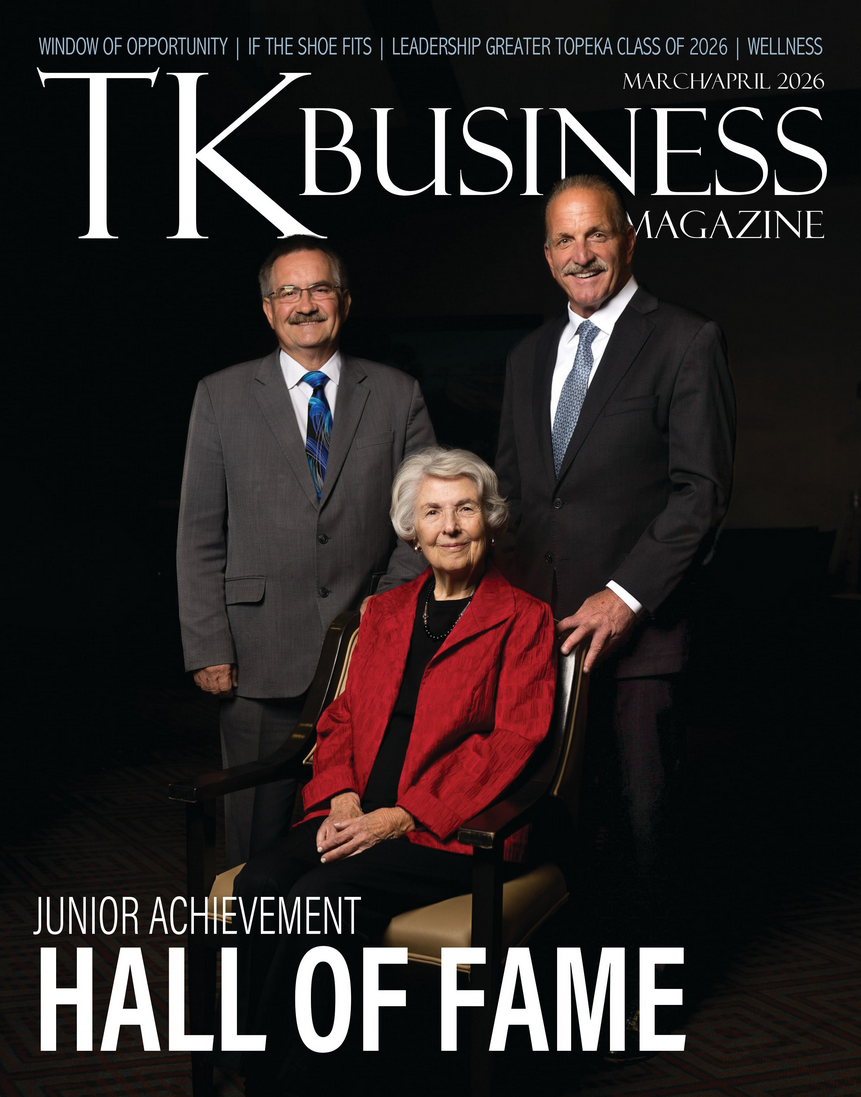
Hoyt Moore | Topeka Business Hall of Fame

Most little boys are fascinated by big trucks, but few pursue a career path that lets them play with trucks their entire lives. Hoyt Moore turned his love for trucks and diesel engines into a thriving family-owned business.

Leadership Greater Topeka | Class of 2026

Each year, the Greater Topeka Partnership identifies a new cohort of local leaders through Leadership Greater Topeka (LGT), a civic program that helps participants better understand their community while developing adaptive leadership skills.

Garage to Growth

A Washburn economist explains why Kansas HB 2343 could help home-based entrepreneurs grow without punishing success or burdening cities with unclear regulations.

Local News

Click on the links below to read more.


Topeka Housing Market Continues to Lead Region in February


Oral Health Kansas Executive Director Tanya Dorf Brunner to Lead National Oral Health Organization


Summer Adventure Awaits at the Topeka RV & Outdoor Show!


Boys & Girls Clubs of Topeka to Host 2026 UNHEARD Conference Focused on Preparing Youth for the Future


Suntell launches AI-powered SpreadIQ™ to accelerate tax return analysis and underwriting workflows


Topeka Chamber to Host Spring Legislative Forum


Kansas Bar Foundation Awards $675,000 in Grants and Scholarships


Esri Recognizes Bartlett & West as a Cornerstone Partner


Greater Topeka Partnership Announces 2026 Award Winners


We want to feature your business news. Send your news releases and article recommendations to braden@tkmagazine.com.


Check out the current issue of

TK Business Magazine


CLICK HERE to read it online!

Facebook  Twitter  Instagram  Linkedin  

Braxton /

I want to meet with the City Manager and have Spencer and his oversight team in the meeting 

The city manager has an assistant that lied in a public hearing.

There is an undeniable discrepancy between the August 2025 application you provided (1.90% requested) and what the City Manager's office, Braxton Copley, the resolution, and the council ultimately acted on (1.5% presented as "as requested in the Petition").

Under the Kansas Community Improvement District Act (K.S.A. 12-6a26 et seq.), the owners' petition controls the rate. The city cannot unilaterally lower it without an amended petition from the applicant. The most plausible explanation is that California Crossing LLC (or their counsel) quietly revised the petition between the August filing and the November "application received" date Copley referenced, dropping it to 1.5% before Resolution 9745 was drafted. No public notice, amendment document, or explanation of that change appears in the resolution, meeting packet, or news coverage.