Wednesday, September 2, 2026

The Topeka City Council sets water (and wastewater and stormwater) rates by ordinance.

No. Topeka’s water rates are set locally. Neither the State of Kansas nor the federal government approves or sets them.

Who actually sets the rates

The Topeka City Council sets water (and wastewater and stormwater) rates by ordinance. The current schedule is in Topeka Municipal Code § 13.05.020. The last multi-year package was adopted in 2023 for 2024–2026; they are in another public rate process now for 2027 and beyond.

That is the normal arrangement for a city-owned utility in Kansas.

Kansas Corporation Commission (KCC)

The KCC does not regulate municipal water rates.

It regulates investor-owned (private) utilities — electric companies like Evergy, gas companies, and a handful of small private water systems (Suburban Water, Barton Hills, etc.). KCC’s own jurisdiction materials state that it does not regulate municipalities. Topeka’s water utility is city-owned, so it is outside KCC rate jurisdiction.

State of Kansas — limited statutory overlay, not rate-setting

Kansas statutes give cities the power to set their own rates and require those rates to be reasonable and sufficient to cover operations, maintenance, extensions, and debt service (see K.S.A. 12-860 and related first-class city provisions).

That is a floor and a reasonableness standard, not a state agency review before rates take effect. There is no Kansas Public Service Commission equivalent for city water.

If someone claimed the rates were unreasonable or unjust, they could theoretically ask a district court to review them. That is rare and is after-the-fact litigation, not routine state regulation.

KDHE regulates water quality (Safe Drinking Water Act implementation, permits, testing), not prices. The Kansas Water Office and Division of Water Resources deal with water rights and planning, not retail rates.

If Topeka borrows from the state Drinking Water Revolving Fund, loan documents can impose financial covenants (dedicated revenue, etc.). Those do not dictate the cents-per-thousand-gallon charge on a residential bill.

Federal government

None on rates. EPA rules cover quality, treatment, lead service lines, and reporting. There is no federal water-rate commission for municipal systems.

Practical takeaway

Topeka’s declining-block industrial discounts, higher outside-city rates, base charges by meter size, and the timing of increases are all local policy choices made by the Governing Body. They can be criticized, compared to peer cities, or challenged in court on reasonableness grounds, but they do not go through KCC or a federal rate case.

Mars, Frito-Lay and Reser's fine foods are the top water users ........

 Yes — those three names are the right cluster. The biggest water users in Topeka are the large food-manufacturing plants, because washing, cooking, sanitation, and cooling are extremely water-intensive.

The companies you named

Frito-Lay (PepsiCo)
Plant at 1303 SW 41st Street. One of their larger U.S. snack plants (Lay’s, Fritos, Doritos, Cheetos, Tostitos). They have publicly talked about cutting water use ~52% per pound of product since 1999 through process changes and sanitation practices. They were among the customers who noticed and complained when Kansas River chloride spiked in 2018, which is a sign they use city water in production, not just for restrooms.

Mars Wrigley
Chocolate plant in Kanza Fire Commerce Park (Topeka Blvd / Innovation Parkway area). Opened around 2014, later expanded (Snickers, Milky Way, 3 Musketeers, M&M’s lines). It was built as a LEED Gold facility with explicit water-efficiency targets: ~35% reduction in potable water use versus a baseline building, 71% reduction in water used for sewage, and no irrigation. Still a large process-water user.

Reser’s Fine Foods (“Reesers”)
Salad / refrigerated-foods plants and distribution, including the main salad plant at 3728 SE 6th Street. They have been in Topeka for decades, employ well over 1,000 people locally, and have been expanding warehouse/distribution space. Produce washing, cooking, and sanitation drive the water demand.

Other names that often show up in the same conversation: Hill’s Pet Nutrition (another large manufacturer) and, historically, Goodyear (they also reacted to the 2018 chloride issue). Hospitals and the state complex use a lot of water too, but the food plants are the standout industrial users.

Scale

The City of Topeka Water Treatment Plant averages about 21–22 million gallons per day (roughly 8 billion gallons a year). In public rate presentations this year, city staff used “one of our industrial users at 10 million gallons” as an example — that figure is monthly. A single customer at that level is using on the order of 300,000+ gallons a day. A handful of food plants can therefore account for a noticeable share of total industrial demand.

Topeka still uses a declining-block rate structure: industrial customers (and especially “Industrial II”) pay less per thousand gallons than residential customers. That is why the city talks about large industrial users separately when they discuss rate increases.

Is this public record?

Yes. Municipal water-billing data is generally public under the Kansas Open Records Act. You can request:

  • Usage by customer class (residential / commercial / industrial / Industrial II)
  • Lists or rankings of the largest volume customers (they sometimes redact exact account names or give ranges)
  • Historical industrial usage for planning or rate studies

The city already discusses “our industrial users” in open council and utility meetings, so the existence and approximate size of the big plants is not secret. Individual monthly bills for a named company are more likely to be treated as customer-specific and may be redacted or summarized.

If you want the actual ranking and gallon figures, the practical next step is a KORA request to the City of Topeka Utilities Department asking for the top water customers by volume for the most recent calendar year (or a multi-year average), broken out by customer class. They are used to those requests.

Fw: 8 Acres in Silver Lake, KS with an Amazing Rustic Home


From: Andre Mehrens [via] PropertyBlastHomes.com <listingalert@propertyblasthomes.com>
Sent: Wednesday, September 2, 2026 2:00 PM
To: Henry A McClure <mcre13@gmail.com>
Subject: 8 Acres in Silver Lake, KS with an Amazing Rustic Home

Click Here to view our online version.
Powered By
Reply to Blast Forward Blast
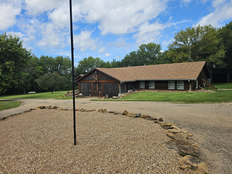
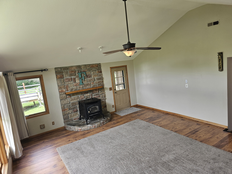
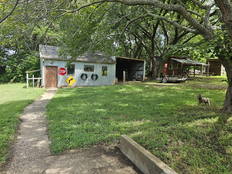
Silver Lake, KS Rustic home with 8 acres and out buildings
Photo A Photo B Photo C
Photo D Photo E Photo F
Price: 
Price Symbol
450,000
Property Address:
7030 NW Valencia Road, Silver Lake, KS 66539
MLS#  246092
Property Description:
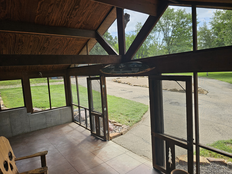
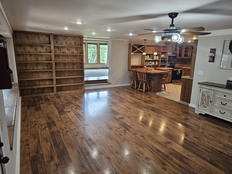
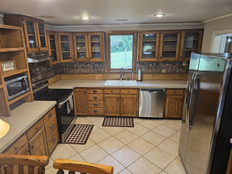
Silver Lake School District has a Fantastic County set home ready for its new owner. This 4 Bedroom, 2 Full bath, Ranch model home, everything on one level except a small step up to the Formal Living Room with Pellet Stove comfort. Large kitchen with plenty of counterspace and an eat at breakfast bar. The view of the property from the home is amazing and beautifully manicured. Be ready to walk your own, already cut, trails on this well maintained 8.10+/- acres as per Shawnee County (see separate video). 2352 Sq ft of finished area gives you plenty of room to spread out inside and the option to hang out on the screened in covered porch. New Roof in June of 2026, Electric 50 Gallon water heater, and bonus storage room with shelving. Large detached 2 car garage at the end of the circle drive. You also have an outside workshop with a carport and 2 bonus buildings. Take a deep breath and embrace the Country Setting!
Key Features:
Bullet Point - Property Type
Property Type: Single Family
Bullet Point - Property Style
Property Style: Ranch
Bullet Point - Number of Bedrooms
4 Bedrooms
Bullet Point - Number of Bathrooms
2 Full Bathrooms
Bullet Point - Building Size in sqft
2,352 square feet
Bullet Point - Price per sqft
Price Symbol
191.33
/sqft
Bullet Point - Lot Size
Lot Size: 8.01 acres
Bullet Point - Year Built
Built 1985
Bullet Point - Garage Size
2 Car Garage
Links:
Agent Photo
Andre Mehrens
Reece Nichols, Topeka Elite LLC
Realtor
Click here to Email Me
Click here to visit our website
Phone #:7852211601
License #: SP#00224205

Servicing Northeast Kansas Buyers and Sellers for over 20 years!
Residential and Commercial Agent

Reece Nichols
Topeka Elite LLC
1931 SW Gage Blvd
Topeka, KS 66604
785-246-6955
Topeka.ReeceNichols.com
Company Logo
This e-blast was delivered by PropertyBlastHomes, a real estate email marketing service. The PropertyBlastHomes service and information provided therein, while believed to be accurate, are provided "as is". PropertyBlastHomes disclaims any and all representations, warranties, or guarantees of any kind.PropertyBlastHomes assumes no liability for errors or omissions.
PropertyBlastHomes| 4600 Summerlin Road, Suite C-2 #452 | Fort Myers | FL | 33919 | USA
The email was sent to mcre13@gmail.com by listingalert@PropertyBlastHomes.com.
You may
edit your preferences or unsubscribe from this list.
If this message was received in error, please report it.
How we use your information

Powered By PropertyBlastHomes.com

Tuesday, September 1, 2026

Yes. Kansas does not offer a single “search by street address” button that dumps every group using 212 SW 8th Ave, Suite 202, but the public records that exist are enough to build that list yourself.

Best official tool: Kansas Secretary of State business entity search

Portal: https://www.sos.ks.gov/eforms/BusinessEntity/Search.aspx

Search by Current Resident Agent Name (Kansas’s term for registered agent). Try variations:

  • Duncan, R.E.
  • Duncan, Robert
  • Duncan, Tuck
  • R.E. “Tuck” Duncan
  • Duncan Law

Results show entity name, type (including not-for-profit corporation), status, registered office, and usually principal/mailing address. Click through each record for officers, formation date, and filings. The public search often caps at about 100 hits, so you may need a few name variants.

That is the cleanest way to see which Kansas entities list him (or his office) as the person/place that receives official mail and legal papers.

Other public lists

What is already easy to confirm

The same suite is publicly used as the address for more than just the law office:

  • Duncan Law Office / R.E. “Tuck” Duncan, Attorney at Law LLC — 212 SW 8th Ave, Suite 202, Topeka, KS 66603.
  • Kansas Public Transit Association (KPTA) — 501(c)(6). He has been Executive Director since 2006. The association lists 212 SW 8th Avenue, Suite 202 and a nearby phone (785-235-8825) with the same fax as the law office.

His site also lists nonprofit/tax-exempt work among practice areas. He is separately described as a principal in Capitol Connection Kansas LLC (government affairs). His son Spencer has also been tied to a Capitol Connection lobbying shop. That is association management + registered-agent work, which is common for Topeka counsel who form entities and run trade groups.

What the records do and do not prove

Using one law-office address as registered office and mail drop for multiple clients and associations is standard and legal. It does not, by itself, mean the groups are shells or that he is a “shill.” It does mean official SOS mail, service of process, and often association correspondence can go through that suite.

To see the actual count and names, run the resident-agent search on the SOS site and cross-check interesting hits on the AG charity list and IRS 990s. That is the perusable public trail. 

There is no public Form 990 that lists a W-2 salary line for Tuck Duncan as KPTA executive director. What is public is how the job is structured and how the association is funded.

How he is paid (structure, not a published salary)

KPTA’s own FAQ says the executive director is “retained under contract by the Board” and works under an annually approved work plan and budget — not described as a regular staff employee.

That usually means:

  • Payment goes to him, his law office, or a related firm as a management/professional-services contract, not a typical nonprofit paycheck.
  • On a full Form 990 that arrangement often shows up as management fees / independent contractor, with the ED listed at $0 salary on the officer table (Missouri’s transit association does exactly that: ED $0 on Part VII, plus a six-figure management fee to another org, of which a slice was later identified as the ED’s pay).

An older association directory listed KPTA with staff count 0 and a budget under $50,000. That is consistent with a small shop that may file only a 990-N e-Postcard (gross receipts normally $50,000 or less) or a short 990-EZ. A 990-N does not disclose anyone’s pay.

So: he almost certainly gets paid, but it is not published as “Executive Director salary: $X.”

Where the money comes from

KPTA says:

  • About one-third of the operating budget is membership dues
  • About two-thirds is a KDOT grant (FTA sections 5311 and 5313(b) / state rural-transit technical assistance style funding)

That grant money is public transit program funding that flows through KDOT to support training, information, and association work for Kansas systems. Dues are the members’ share.

It is not a large national trade-group ED job. APTA’s CEO is in the high six/seven figures; state associations like this are typically a part of a lawyer/lobbyist’s book of business, not a $200k+ standalone salary.

What he gets besides cash

Even without a published salary, the role includes:

  • Contract fee for running the association (admin, annual meeting/expo, bulletins, board support)
  • Use of 212 SW 8th Ave, Suite 202 as KPTA’s official address
  • A separate KPTA phone (785-235-8825) and the same fax as the law office
  • Statehouse / agency access as the association’s paid voice
  • Possible separate legal or government-relations billing if members or the association hire the law firm for that work (that would be on invoices, not the ED title)

How to see the actual dollars

  1. IRS Tax Exempt Organization Search — find KPTA’s EIN, then download every 990 / 990-EZ / 990-N.
    irs.gov/charities-non-profits/search-for-tax-exempt-organizations
  2. On a full 990, check Part VII (officers) and Part IX line 11 (management / legal / other fees) and the independent-contractor list.
  3. KDOT public-transit grant files and any KORA request for the KPTA contract and invoices (the 2/3 grant piece is the state-money trail).
  4. Kansas SOS entity record for the legal name of the association and any related LLC that might be the contractor.

Bottom line: Public sources do not show a large listed ED salary. They show a board contract to run a small 501(c)(6) whose budget is mostly KDOT grant + dues, operated out of his law office. The dollar amount is in that contract and (if they file more than a 990-N) in the fee lines of the 990 — not in a published “salary” column under his name.

In short: the charter makes councilmembers legislators and policymakers, not administrators. The detailed operating rules live in the Governing Body Rules of Procedure, not in a long duties list inside the charter itself.

 The Topeka city charter (compiled in Appendix A of the Topeka Municipal Code) does not contain a long, itemized “job description” list of personal duties for an individual councilmember. Powers are vested in the governing body as a whole (the nine district councilmembers + the mayor).

The core charter language (verbatim)

Appx. A, Sec. A2-25 – Powers of the governing body:

(a) The Council and Mayor shall be the governing body of the city. It shall exercise the corporate powers of the city and, subject to the expressed limitations of this Charter Ordinance, it shall be vested with all powers of legislation in municipal affairs adequate to provide a complete system of local government consistent with the Constitution of the State of Kansas. It shall have no administrative powers.

That is the main statement. The governing body is a legislative / policy-making body. Day-to-day administration belongs to the city manager.

A later charter ordinance (No. 117) repealed an older, longer “Powers of the City Council” section and left this additional specific power:

In addition to any other grant of authority under the Constitution of the State of Kansas, applicable state law, or Charter Ordinance No. 94, as amended, the Council shall have the following duties, powers and responsibilities including, but without limitation thereto:
The ability to override a mayoral veto of any council legislation whether by resolution or ordinance by a two-thirds (2/3) vote of the entire council, that number being six (6).

The gist

  • Councilmembers (with the mayor) make city law and policy: they vote on ordinances, resolutions, budgets, zoning/plats, contracts that require governing-body approval, appointments where the charter or ordinance requires it, etc.
  • They do not run departments, give orders to city staff, or handle administration. Those functions belong to the city manager. Individual members cannot direct staff; direction to the manager comes from a majority of the governing body.
  • Meetings: at least twice a month; six members make a quorum; most actions need six affirmative votes (ordinary home-rule ordinances that are subject to mayoral veto need five council votes).
  • The city’s own description: the Council “conducts the business of the city by voting on ordinances, resolutions, applications, plats, zoning petitions, receiving reports and other items.” Service is treated as part-time.

In short: the charter makes councilmembers legislators and policymakers, not administrators. The detailed operating rules live in the Governing Body Rules of Procedure, not in a long duties list inside the charter itself.