Wednesday, July 22, 2026

Topeka JUMP is a long-running, clergy- and congregation-driven organizing effort that turns faith communities into a coordinated civic force.

 Topeka JUMP (Justice, Unity, & Ministry Project) is a faith-based 501(c)(3) nonprofit and congregation-based community organizing group in Topeka/Shawnee County, Kansas. It focuses on systemic policy and funding changes to address issues affecting marginalized groups.

It is part of the DART (Direct Action and Research Training) network of similar organizations.

History and Structure

Founded in 2012 by a group of local clergy seeking to live out a biblical call to justice (drawing heavily on Micah 6:8: “What does the LORD require of you? To do justice, to love mercy and to walk humbly with your God”). It started small and has grown into a coalition of roughly 30–36 faith communities.

These include a diverse mix of United Methodist churches, Baptist, Catholic, Mennonite, Presbyterian, Episcopal, non-denominational, and others (examples from past lists: Asbury Mt. Olive UMC, El Shaddai Ministries, Grace Episcopal Cathedral, University UMC, Most Pure Heart of Mary Catholic Church, Southern Hills Mennonite, Temple Beth Sholom, and more). Member congregations supply the bulk of the “people power.”

The model is classic DART-style organizing:

  • Congregations identify problems through listening and surveys.
  • Members research solutions and build relationships with decision-makers.
  • Large public assemblies pressure officials for specific, public commitments.
  • Follow-up ensures accountability.

It has received awards from NAMI Kansas (2015), Living the Dream Inc. (2017), Topeka Center for Peace and Justice (2018), and Cornerstone of Topeka (2019).

Leadership and Staff

  • Lead Organizer / Director: Sarah Balzer (hired around early 2023 after founder Shanae Calhoun/Elem left to start Willow Consulting). Balzer previously worked with the sister organization Justice Matters in Lawrence; she has a social work background and Mennonite ties. She has been the consistent public face in coverage through at least 2024–2025.
  • Associates historically include Jason Maymon and Austin Christ (Christ was referenced as a spokesman around the April 2026 assembly).
  • Co-chairs / Executive team: Rotate among clergy and lay leaders from member congregations (examples in recent years: Melodine/Melodene Byrd of El Shaddai, Christine Potter, Rev. Lorna Boden of Tecumseh UMC, Rev. Harry Christian, Rev. Curtis Odum, and others).

Exact current staffing can shift; the best source is direct contact with the organization.

Office and Contact

  • Address: 3033 SW MacVicar St. (sometimes listed as Ave.), Topeka, KS 66611.
  • Phone: (785) 783-3721
  • Email: topeka.jump@gmail.com
  • Website: topekajump.com (includes donation link and basic campaign info)

Meetings and Events

Yes, they hold regular and large-scale meetings. The structure is intentional and public-facing:

  • Community Problems Assembly — Members vote on priority issues for the year (example: November 3, 2025, at El Shaddai Ministries, 920 SE Sherman Ave.).
  • Rally / Solutions events — Mid-year (e.g., March 2026).
  • Nehemiah Action Assembly — The signature annual event (typically April or early May). Hundreds to over 1,000 people from member congregations fill a venue (most often Washburn University’s Lee Arena at 1901 SW Mulvane St., sometimes White Concert Hall). Officials are invited, research and personal stories are presented, and specific public commitments are sought. Recent example: April 30, 2026, at Lee Arena, focused on affordable housing, homelessness, food insecurity, and violence reduction, with attendance around 1,050.
  • Justice Ministry Celebration — Usually June.
  • Campaign-specific steering committees and research teams meet more frequently.
  • Occasional moral marches / rallies (e.g., April 19, 2026, housing march from University United Methodist Church to a Habitat for Humanity project site, with participants carrying symbolic paper keys).

Locations rotate among Washburn venues and member churches. Childcare is sometimes offered at large assemblies. Formats can adjust for health guidelines.

Current and Recent Campaigns / Impact

They pursue multi-year campaigns with measurable policy wins:

  • Safe & Affordable Housing (ongoing since ~2015): Helped pass the city’s Affordable Housing Trust Fund ordinance (2019). Continues pushing for permanent annual public funding (target often cited as $2 million) or dedicated revenue such as a sales tax. Recent moral marches and Nehemiah commitments from city officials.
  • Mental Health Crisis / Crisis Intervention: Worked for Crisis Intervention Center (CIC) beds so people in crisis go to treatment rather than jail or ER. Secured significant state funding commitments for Valeo Behavioral Health (plans for dozens of beds).
  • Violence Reduction: Advocated for evidence-based Group Violence Intervention strategies; related efforts include the Community Inspired Violence Intervention Coalition (CIVIC), which received startup funding.
  • Homelessness: Elevated as a major priority around 2023–2024 (including calls for low-barrier shelter options).
  • Food Insecurity (newest major campaign as of late 2025/2026): Voted in by network members; announced a grocery delivery partnership model (inspired by a Dallas program) aimed at food deserts, especially central Topeka where insecurity rates are much higher.
  • Past campaigns: Expanded Oxford House recovery beds, public transit pilot programs (SOTO/NETO), education supports (Communities in Schools), predatory lending reform (paused), and budget restorations for mental health services.

They emphasize data, personal testimony, and sustained pressure rather than one-off protests. Coverage appears regularly in the Topeka Capital-Journal, WIBW, and other local outlets.

Summary

Topeka JUMP is a long-running, clergy- and congregation-driven organizing effort that turns faith communities into a coordinated civic force. Its power comes from large, disciplined public assemblies that extract specific commitments from elected officials and agency leaders, followed by accountability work. The office is on SW MacVicar, the most visible “head” role is the Lead Organizer (Sarah Balzer in recent years), and the big public meetings are the annual Nehemiah Action Assemblies plus problem-identification and celebration events.

For the absolute latest on leadership, exact meeting schedules, or involvement, contact them directly via the phone, email, or website above—organizational details evolve with staff and campaign cycles.


Tuesday, July 21, 2026

Look (https://mcremedia.blogspot.com/2024/05/fwd-go-topeka-inquiry.html)

Look here, folks. A while back—May of 2024—I put up a post on the blog about this exact thing. Molly Howey, who was running GO Topeka at the time, sent over their list of grants, contributions, sponsorships, and scholarships from 2022 and 2023. You can still find it at mcremedia.blogspot.com if you want to see the whole thing with your own eyes. That list tells the story plain as day.

Good golly MOLLY

Sales tax money earmarked for economic development was going out the door to:

  • New Mount Zion Baptist Church for community drive-thru dinners and back-to-school events
  • Shampayne Lloyd Ministries for a “Victorious Woman Retreat”
  • Topeka Center for Peace and Justice
  • Topeka Family and Friends Juneteenth Celebration
  • YWCA Northeast Kansas for scholarships and Women of Excellence dinners
  • NAACP Topeka Branch for their Freedom Fund Banquet
  • Oakland Garden and other community grower groups
  • NOTO Arts and Entertainment District for “diversity and inclusion”
  • A pet nursing hotel that won a pitch contest

Now listen close. None of those groups are evil. Most of them do work that some people care about. But they do not deserve a single dime of the half-cent sales tax that was sold to the public as economic development money. That tax is paid by every working man and woman in Shawnee County every time they buy something. It was never meant to be a community chest for churches, ministries, celebration committees, social advocacy groups, or pet hotels. Those are charitable causes. Charity starts at home—with people freely choosing to give out of their own pockets. When you force it through a sales tax and let a private group hand it out, it stops being charity and starts being a handout taken from taxpayers who never agreed to fund it.

Real economic development means jobs that put food on tables, payroll that grows the tax base, and businesses that expand and stay here. Writing checks to a women’s retreat or a Juneteenth event or a peace-and-justice center does none of that. It just feels good to the people writing the checks.

And here’s where the rubber meets the road. During the budget process—every single year when JEDO and GO Topeka decide where that money goes—common sense says if you keep allocating it to the wrong places, the public is going to suffer. Every dollar that goes to a church dinner or an arts diversity program or a ministry retreat is a dollar that is not available for real job incentives, workforce training that leads to actual paychecks, or shovel-ready sites that could bring employers to town. Over time that adds up. Fewer good jobs. More of our young people packing up and leaving. Higher pressure on the rest of the tax base. Roads and bridges and everything else that actually keeps the place running get squeezed. The public pays the price while the handouts keep flowing to groups that already have their own fundraising channels.

That’s not complicated. That’s just common sense. The money has a purpose. Stick to the purpose. Anything else is taking from the people who work for a living and giving it to causes they never voted to support. 

Full credit and thanks to This Is Topeka for the thorough reporting. Check their site for the original article and ongoing local coverage.

Lauren’s Bay Finally Moving Forward: Unpaid Taxes Lead to Auction and New Builders By Henry McClure | MCRE, LLC

In the spirit of transparency and keeping Shawnee County informed on local development news, I wanted to share a strong summary of recent reporting from This Is Topeka (thisistopeka.com). All credit goes to This Is Topeka Staff for their July 21, 2026 article: “Years of Unpaid Taxes End With Lauren’s Bay Sold to Three Builders.” I highly recommend reading the full piece for the complete details.

Key Developments at Lauren’s Bay

After years of stalled progress, unpaid taxes, and debates over special assessments, more than 100 vacant lots in the southwest Topeka subdivision (near SW 47th and Wanamaker, Auburn-Washburn School District) were sold at a Shawnee County judicial tax foreclosure auction on June 10, 2026.

The buyers include three reputable local builders:

  • Diamond Homes of Topeka (formerly Dultmeier Homes) – approximately 40 lots.
  • DrippĂ© Homes – approximately 12 lots.
  • Skill Pro Group – approximately 52 lots.

Builders have shared optimistic timelines with This Is Topeka, with clearing already underway and foundations potentially starting after August 1. Plans call for 10–15 homes from one builder and around six from another in the coming year, with potential for more phases.

The Backstory

As This Is Topeka explains, Lauren’s Bay was planned as an upscale neighborhood. Unusually, the city invested in full infrastructure (roads, sewers, utilities) upfront about 15 years ago— an “experiment” not typically repeated. Development lagged, leaving infrastructure in place but insufficient homes to support the costs. This led to massive accumulation of delinquent property taxes, penalties, and special assessments (reportedly exceeding $7 million at one point for properties tied to developer Jim Klausman).

Special assessments, as detailed in the article, are a mechanism to fund improvements benefiting specific properties rather than the entire tax base. When unpaid, they can trigger foreclosure.

City leaders had explored deals to forgive portions of debt in exchange for payments and commitments to build, citing housing needs. These efforts faced significant public opposition over fairness and were ultimately set aside, allowing the county foreclosure process to proceed.

Auction Strategy and Results

To promote actual development over speculation, the county grouped lots into larger packages. This approach worked, landing the properties with established builders ready to construct. While the auction generated less than $1 million against millions owed, the focus of such sales is returning land to productive use, future tax revenue, and community benefit rather than full past-due recovery.

Looking Ahead

For existing residents, this should reduce overgrown vacant areas and bring more neighbors. It represents a fresh start for the subdivision, leveraging existing infrastructure in a strong school district. As This Is Topeka notes, questions remain about accountability in the original agreements and handling of public investments, but the sale opens the door to new homes and growth.

This outcome underscores the importance of timely development, fiscal responsibility, and transparent processes in local projects—topics central to making Shawnee County a place where families want to live and build.

Full credit and thanks to This Is Topeka for the thorough reporting. Check their site for the original article and ongoing local coverage. 

Saturday, July 18, 2026

In Shawnee County, Kansas (which includes Topeka), getting a question (ballot measure) on the ballot generally relies on petitions for citizen-initiated actions, referrals by governing bodies, or specific statutory processes.

There is no broad statewide citizen initiative or referendum for laws or constitutional amendments—Kansas relies on the legislature for statewide measures. Local options exist for cities (like Topeka) and counties, but they are limited, vary by issue, and must follow exact statutory requirements.

No, a city council person or county commissioner does not have to sponsor it, and it does not require their consensus or a majority vote upfront. Citizens can drive the process via petition in many cases, forcing the governing body to act (e.g., pass the ordinance or call an election). However, the governing body can sometimes adopt the measure itself or challenge its legality. Petitions are the primary citizen tool.

Key Distinctions: City (Topeka) vs. County (Shawnee County)

  • Topeka (first-class city with home rule powers): Stronger initiative/referendum options under K.S.A. 12-3013 and constitutional home rule (Article 12, Section 5).
  • Shawnee County (unincorporated areas or countywide): More limited; home rule resolutions (K.S.A. 19-101a et seq.) are common for county actions, with petition options for specific taxes, bonds, or charter matters. Veto referendums exist for certain home rule counties.

General Process for Citizen Petitions (Most Common Path)

  1. Determine the Type of Measure and Applicable Statute:

    • Initiated Ordinance (Cities like Topeka): Propose a new local law/ordinance. Requires signatures from 25% of electors who voted in the last preceding regular city election (for first-class cities like Topeka). Example: A recent property tax cap petition needed ~2,795 signatures based on prior turnout.
    • Referendum/Veto (Repeal or Protest Existing Action): For city ordinances (home rule cities have mandatory referendum power for charter ordinances) or specific county actions. Signature thresholds vary (e.g., lower for some vetoes).
    • County-Specific (e.g., Sales Tax, Bonds, Gage Park): Often 5-10% of voters from a prior election (e.g., 5% for certain Shawnee County sales tax or park measures; 10% for general county sales tax). Some require resolutions from taxing districts.
    • Charter Resolutions/Amendments: For home rule or structural changes. Petitions can trigger elections.
    • Other specifics: Bond questions, tax levies, zoning, liquor, etc., have tailored rules.

    Consult statutes (e.g., K.S.A. Chapter 12 for cities, Chapter 19 for counties, Chapter 25 for elections) or an attorney. Not all issues qualify (e.g., administrative matters or special assessments often excluded).

  2. Draft the Petition and Question:

    • Submit a copy of the proposed question/ordinance to the county counselor (Shawnee County) or district attorney before circulating for an advisory opinion on legality/form (within 5 business days; rebuttable presumption of validity if approved or no response).
    • Petition must include: Clear ballot question (per K.S.A. 25-620/25-3601), name of subdivision, signer recital ("I have personally signed... registered elector of [subdivision]..."), circulator affidavit (notarized, witnessing all signatures on their pages).
    • Use the SOS Petition Circulation Guide for format. No standard pre-printed forms (except recall). Seek legal help for drafting.
  3. Circulate and Collect Signatures:

    • Who can sign/circulate: Registered electors of the relevant area (city or county). Circulators need not be registered in the district but must witness every signature on their pages, collect from only one county per page, and notarize their affidavit.
    • Time limit: Petitions void after 180 days from the first signature (shorter for recall). File all at once as a group.
    • Verification: County election officer checks signatures against voter rolls. Insufficient = start over; no successive filings for the same issue.
  4. File the Petition:

    • With the city clerk (Topeka) or Shawnee County Election Office (county issues). They verify and certify.
    • Contact: Shawnee County Election Office, (785) 251-5900.
  5. Governing Body Response:

    • For city initiatives (K.S.A. 12-3013): Within 20 days, pass the ordinance unchanged or call a special election (or use next regular if within 90 days).
    • County: Similar for qualifying petitions (e.g., tax measures); they direct the county clerk to submit to voters.
    • Governing body can adopt it outright, avoiding an election.
  6. Election:

    • Usually at the next primary/general election (unless special authorized). Simple majority typically passes it.
    • If passed by voters: Becomes binding (with limits on later repeal/amendment for some ordinances).

Other Ways (No Petition Needed from Citizens)

  • Governing Body Referral: City council or county commissioners can place questions (e.g., tax, bonds, charter) via resolution/ordinance.
  • Home Rule Charter Resolutions: County can use K.S.A. 19-101a for local legislation; petitions can influence or trigger votes in some cases.
  • Specific Statutes: E.g., sales tax, park authorities, zoning referendums have their own triggers.

Challenges and Tips

  • Legality: Courts can strike invalid forms or non-qualifying subjects. Challenge window is short (e.g., 20 days).
  • Costs/Practicality: Signature gathering is labor-intensive; professional help or volunteers needed. High thresholds for cities.
  • Resources:
    • Kansas SOS Petition Guide: sos.ks.gov.
    • Shawnee County Election Office / City Clerk.
    • Statutes via kslegislature.org or ksrevisor.gov.
    • Consult a lawyer (county counselor opinion is advisory only).
  • Examples: Topeka tax petitions, Shawnee County bond/park measures, past consolidation votes.

This is complex and issue-specific—requirements differ for bonds, taxes, zoning, etc. For your exact goal (e.g., development policy, tax, or reform), review the precise K.S.A. section and consult the Election Office or legal counsel early to avoid invalidation. Success depends on strong organization, clear drafting, and sufficient support.

Friday, July 17, 2026

Fw: A Doctor's Note - Senator Marshall's Weekly Newsletter


Henry McClure
785.383.9994 

Sent from my T-Mobile 5G Device
Get Outlook for Android

From: Senator Roger Marshall <donotreply@marshall.senate.gov>
Sent: Friday, 17 July 2026 16:49:19
To: mcre13@gmail.com <mcre13@gmail.com>
Subject: A Doctor's Note - Senator Marshall's Weekly Newsletter
 

Image

Visit Our Website Media

Image

Fraud Bust of the Week

This week’s ‘Fraud Bust of the Week’ shows just how far some criminals will go to take taxpayer dollars meant for others. The case centers on a mother and her two adult sons who worked together for years on a conspiracy to steal over $5 million in taxpayer dollars by falsifying paperwork and tax returns.

Along with filing $1,533,395 worth of fraudulent claims with the IRS, the family conspired to obtain over $3,273,455 in COVID-19 unemployment funds — funds intended to aid hardworking Americans who lost their jobs through no fault of their own. But it doesn’t stop there — the family also submitted fraudulent claims to the U.S. Small Business Administration, seeking $337,645 in PPP loans designed to help small businesses keep their employees on payroll through the pandemic.

Thanks to the Trump Administration’s work, these criminals have been indicted and will face justice. Americans are done with criminals selfishly taking advantage of programs designed to help those in need, and we will not quit fighting until every one of these fraudsters has been caught.

Click here for the full story.

Senator Marshall: Every Democrat Wants to Vote Against Voter ID

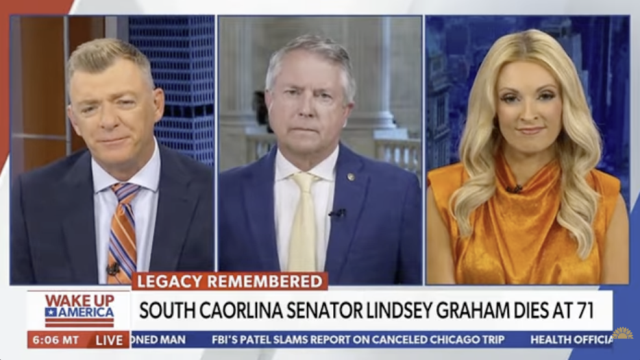
This week, I joined Newsmax, KCMO Radio, KNSS Radio, and Fox Business to discuss the passing of Senator Lindsey Graham, his personal character and genuine love for America, his ongoing legacy in the Senate, and how the work to pass the SAVE America Act and require voter ID must continue in his honor. We also discussed new evidence that raises serious questions about Dr. Fauci’s role in the origins of COVID-19, the federal government’s response to the pandemic, and the treatment of whistleblowers, and my call for the Department of Justice to appoint a special counsel to investigate Dr. Fauci.

Image

Click HERE or on the image above to watch the full interview on Newsmax.

Image

Click HERE or on the image above to watch the full interview on KCMO Radio.

Image

Click HERE or on the image above to watch the full interview on Fox Business.

Image

Click HERE or on the image above to watch the full interview on KNSS Radio.

Senator Marshall Calls for Special Counsel Investigation into Dr. Fauci

This week, I sent a letter to Acting Attorney General Todd Blanche calling for the appointment of a Special Counsel to investigate Dr. Anthony Fauci following the Office of the Director of National Intelligence’s (ODNI) recent declassification of documents regarding the handling of COVID-19.

Since the start of the pandemic, I have remained committed to investigating COVID-19 origins and gain-of-function oversight, and I believe newly declassified documents warrant an independent special counsel investigation into Dr. Fauci’s role, as well as a review of former President Biden’s pardon. The pandemic imposed enormous costs on Kansas families, businesses, and communities, and the restoration of public trust demands an independent investigation of federal officials’ conduct before, during, and after the pandemic.

Click here to learn more about my request for a special counsel investigation.

Senator Marshall Applauds $2.1 Million in Kansas Library Funding, Emphasizes Importance of American History

This week, I also celebrated $2,109,394 in funds being awarded to the State Library of Kansas by the Institute of Museum and Library Services (IMLS).

I fought hard for these dollars during the federal appropriations process because I know how vital they are for Kansas communities. These funds will be used by the State Library to directly support local libraries across Kansas, funding important community initiatives like local summer reading programs.

Kansas libraries are more than just a place to check out books. They provide resources for kids to learn to read, learn to think, and learn what it means to be an American. As we celebrate America’s 250th birthday, these dollars also play a critical role in ensuring Kansas kids grow up knowing our nation’s history and our values of faith, family, and freedom.

Click here to learn more.

Senator Marshall Applauds Improved Processing Speed for Fallen Officer Benefits

This week, I applauded an announcement by the Department of Justice that processing speed for the Public Safety Officers’ Benefits (PSOB) Program has tripled in the last month, providing over $96 million in benefits to eligible surviving families of fallen public safety officers.

As a Kansan and the son of a former police chief, I especially appreciate this improvement as we continue to remember the four Kansas law enforcement officers who made the ultimate sacrifice to protect their communities in 2025.

The PSOB Program provides benefits to family members of fallen law enforcement officers, firefighters, and first responders, and disability benefits to officers and their families in case of a catastrophic injury in the line of duty. These important benefits provide families with funds to help them adjust after loss or catastrophic disability, as well as assisting with education costs.

When an officer doesn’t come home, their family shouldn’t have to fight the government on top of everything else. I am thrilled to hear about this progress in cutting red tape and getting benefits to these families faster, and I will keep pushing until every family gets what they’ve earned.

Click here to learn more.

Senator Marshall Joins Colleagues in Calling for Senate Vote on Comprehensive Anti-Fraud Package

This week, I joined my Senate Republican colleagues in calling on the Senate to take up the Protecting American Taxpayers Act, a comprehensive package of anti-fraud reforms that would recover taxpayer dollars, prevent future fraud, and strengthen accountability across the federal government.

This legislation is projected to save taxpayers $240 billion by preventing fraud before it occurs, recovering stolen funds, and holding criminals accountable. I am proud that it includes my WALZ Act, legislation that would help prevent fraud by requiring payments to be made as reimbursements only after services have been provided — closing loopholes that have allowed billions in taxpayer dollars to be stolen.

Fraudsters are always looking for the next weak spot, and for years, Washington has made their job far too easy. President Trump has brought a renewed focus to rooting out fraud, waste, and abuse, and Congress should seize this opportunity to make those reforms permanent, saving taxpayers billions and better protecting the hard-earned dollars of Kansas families.

Click here to learn more.

Senator Marshall Introduces Bill Requiring Insurers to Cover Restorative Care Following Harmful Gender Transition Procedures

This week, I introduced the Treatment and Restoration Uniformity and Transparency in Health Coverage (TRUTH in Coverage) Act to require private health insurance plans that cover gender transition procedures to also cover medically necessary care for patients experiencing complications or seeking restorative treatment following those procedures.

As physicians, we take an oath to do no harm. Unfortunately, too many Americans have undergone irreversible gender transition procedures only to be left with life-changing complications and nowhere to turn. Insurance companies have been more than willing to profit by covering these procedures, but when patients need care to treat complications and restore healthy human function, they are often left on their own. Patients deserve transparency before making life-altering medical decisions, and insurance companies should be consistent in their coverage when those decisions result in lifelong complications.

Starting in 2027, this bill establishes a federal standard ensuring insurance companies cannot cover transition procedures while denying coverage for treatment needed to address resulting harm or restore healthy human function. I will always fight to protect minors from these procedures and work to ease the suffering of those who have undergone them — it is only right that they have access to care that can help relieve the lifelong complications that often come along with these transitions.

Click here to learn more.

Senator Marshall Questions CDC, ASPR Nominees on America’s Public Health Preparedness

On Wednesday, I had the honor of questioning President Trump’s nominees to lead two of the nation’s top public health agencies during a Senate Health, Education, Labor, and Pensions Committee hearing. The witnesses included Sean Kaufman, M.P.H., nominee to serve as Assistant Secretary for Preparedness and Response at the Department of Health and Human Services, and Dr. Erica Schwartz, nominee to serve as Director of the Centers for Disease Control and Prevention (CDC).

Throughout the hearing, I emphasized restoring trust in public health, strengthening America’s preparedness for future pandemics, supporting innovation through the Biomedical Advanced Research and Development Authority (BARDA), and reducing the nation’s dependence on foreign sources of active pharmaceutical ingredients (APIs).

Image

Click here for more info.


Image


Great Bend Tribune: Sen. Marshall visits Clara Barton Hospital.

WIBW: Local politicians react to passing of longtime Senator Lindsey Graham.

New York Post: GOP senator demands special counsel probe of Dr. Anthony Fauci over COVID-19 origins.

Newsmax: Sen. Marshall to Newsmax: Senate Should Advance SAVE Act Piece by Piece.

Washington Times: China’s Payment Foothold Threatens American Small Businesses.

Breitbart: GOP Sen. Marshall: Gulf States Should ‘Finish the Job’ with Iran, ‘We’ve Done Our Job’.

KCLY: Federal Funding to Support Kansas Libraries, Reading Programs and Community Services.

Ad Astra Radio: Pawnee and Stafford Counties Receive $20,255,000 BUILD Grant from the U.S. Department of Transportation.

KOAM: Sen. Marshall touts $2.1M in federal funding for Kansas libraries.

KCLY: DOJ Announces Faster Processing for Public Safety Officers’ Benefits.

Image

New York Post: Markwayne Mullin to announce election security crackdown after The Post reveals DHS IDs 275K noncitizens registered to vote.

Washington Examiner: Trump administration says trade fraud crackdown has topped $1 billion.

Epoch Times: Federal Health Watchdog Reports $5.56 Billion in Expected Recoveries, Cost Savings.

White House: President Trump’s Relentless Strategy Is Dismantling Fentanyl Networks and Saving Lives.

Fox News: Who wants their child to be a millionaire? Trump has given you that chance.

Wall Street Journal: U.S. Small Business Confidence Improved in June.

Fox Business: Consumer inflation cooled more than expected in June as gas prices fell.

New York Times: China’s Economy Grows at Slowest Pace in Years.

Unsubscribe

Image
imageimage