Friday, March 6, 2026

Loud Light ### Party Lean: Overwhelmingly Democratic. No Republican endorsements found.

 Loud Light is a Kansas-based nonprofit organization dedicated to increasing civic participation, particularly among youth and underrepresented communities. Below, I'll provide a comprehensive overview based on available public information, including their structure, history, political orientation, activities, funding, and involvement with candidates or elections. This draws from their official websites, financial disclosures, third-party analyses, news reports, and related searches. Note that Loud Light operates as two related entities: the main 501(c)(3) nonprofit (focused on education and nonpartisan engagement) and Loud Light Civic Action, a 501(c)(4) affiliate (focused on advocacy and lobbying). They claim to be nonpartisan, but their activities, partnerships, and endorsements align with progressive and Democratic-leaning causes.

History and Founding

  • Founded: 2015 by Davis Hammet in Topeka, Kansas. It started as a one-person operation aimed at boosting youth voter turnout and participation. By 2025, it marked its 10th anniversary, having grown into a larger organization with staff, fellows, and statewide reach.
  • Evolution: Initially focused on voter registration and education, it expanded to include coalition-building, informational campaigns, and legal challenges to voting barriers. The Civic Action arm was established to handle more direct advocacy, as 501(c)(3) rules limit political activities.
  • Key People:
    • Davis Hammet (Founder and President): Background in left-leaning activism, including work with RePower (a progressive training group), the U.S. Senate campaign of Charlie Crist (initially Independent, later Democrat), and Planting Peace (a global anti-poverty nonprofit). He remains the primary leader and is the only compensated key personnel in financial filings (salary around $93,000–$100,000 in recent years).
    • Other Staff/Board: Includes Advocacy Director Melissa Stiehler (Civic Action arm), board members like Rev. Sarah Oglesby-Dunegan (Chair) and Farai Harreld (Treasurer), who receive no compensation. The organization employs fellows and volunteers for fieldwork.
  • Location and Reach: Headquartered in Topeka, KS (P.O. Box 4045), with activities statewide. They emphasize Kansas-specific issues but are part of national networks like the Alliance for Youth Action.

Mission and Programs

  • Core Mission: To engage, educate, and empower underrepresented populations (especially youth, people of color, and low-income communities) to build community power and influence decision-makers. They aim to "turnout the vote and turn up democracy" by overcoming voter apathy, providing accessible information, and demanding accountable government.
  • Key Programs and Activities:
    • Voter Registration and Education: Run drives targeting students and young voters (e.g., helped register 10,000 new voters ahead of the 2020 election). Provide guides on voting rules, such as allowing college students to register at either their home or school address.
    • Informational Campaigns: Produce videos, explainers on legislation, and resources like community resource fairs (e.g., KC Metro event in March 2026). They track bills and testify in the Kansas Legislature (e.g., opposing HB 2438 in 2025, which would restrict online voter registration).
    • Advocacy and Coalitions: Partner with groups like ACLU Kansas, Demos, League of Women Voters, and Kansas Governor Laura Kelly (D) on expanding voter access. Involved in issues like fair maps (#fairmapsks protests at the Kansas Supreme Court), abortion rights (opposed bans post-2022), trans rights (condemned SB 244 veto override in 2026, calling it "state-sanctioned harassment"), and civil rights.
    • Youth Empowerment: Fellowships and training to build leadership among young Kansans. Member of the Alliance for Youth Action, a network of progressive youth voter groups.
    • Legal Actions: Filed lawsuits against Kansas election officials (e.g., against Secretary of State Scott Schwab (R) for delaying public voter data in 2020 and 2021; won a 2019 case against Johnson County for provisional ballot lists). Temporarily halted voter registration drives in 2021 due to a new law broadly defining "impersonating an election official" as a felony, fearing prosecution.
  • Impact: Claim to represent over 16,000 Kansans across all legislative districts. Focus on countering low turnout (e.g., citing 2018 stats: 53% overall, 32% youth). They've influenced policy by challenging restrictive laws and boosting participation in marginalized groups.

Political Orientation: Liberal/Progressive, Leans Democratic

  • Self-Description: Nonpartisan, focused on "social good and justice." They emphasize collective action to hold officials accountable based on "needs and values" of young/underrepresented Kansans.
  • In Practice: Described by third-party sources like InfluenceWatch as "left-of-center." Their activities oppose Republican-led voting restrictions (e.g., grace periods for mail ballots, early voting limits) and support progressive issues like expanded voter access, LGBTQ+ rights, and abortion access. They've criticized GOP figures like Rep. Pat Proctor (R) for pushing "conspiracy-minded" bills.
    • Not Republican or conservative: No evidence of support for conservative policies or candidates. Their opposition to bills like those restricting voting aligns with Democratic priorities.
    • Liberal/Progressive: Partnerships with left-leaning groups (ACLU, Demos, Movement Voter Project). Hammet's background is in Democratic/progressive campaigns. They advocate against "corporate influence" in politics and for inclusive representation.
  • Controversies:
    • Accused by conservatives of promoting "voter fraud" through access expansions, but no substantiated claims.
    • In 2021–2022, paused registration due to GOP-backed laws, highlighting tensions with Republican-dominated legislature.
    • Involved in high-profile advocacy, like condemning anti-trans legislation and supporting youth turnout that polls showed opposed abortion bans (75% of 18–34-year-olds per their cited data).

How They Pick/Engage with Candidates: Endorsements via Civic Action Arm

  • General Approach: The 501(c)(3) arm (Loud Light) does not endorse candidates, as it's prohibited. Instead, they educate voters on issues and candidates without direct support.
  • Endorsements: Handled by the 501(c)(4) Loud Light Civic Action, which can engage in limited political activity. They endorse based on alignment with voting rights, civil rights, youth empowerment, and progressive values (e.g., expanding access, opposing suppression). Criteria aren't explicitly detailed publicly, but endorsements favor candidates who support "free and fair elections" and community needs.
    • Party Lean: Overwhelmingly Democratic. No Republican endorsements found.
    • Examples from Recent Elections (via Blue Voter Guide and reports):
      • Federal/Statewide: Endorsed Patrick Schmidt (D) for U.S. House (KS-02), emphasizing veterans' issues.
      • State Legislature: Endorsed candidates like Jennifer Day (D) for Kansas House, Alexis Simmons (D) for Kansas House (opposed personal attacks in election reform hearings), and others in districts focused on affordable healthcare, union jobs, and voting rights.
      • Other: Supported pro-choice and pro-LGBTQ+ Democrats in 2022–2024 cycles, aligning with groups like LPAC (LGBTQ PAC) and Kansas Democratic Party.
    • Process: Likely involves reviewing candidate positions on key issues like voter access and civil liberties. They build "power to impact any election" through turnout, indirectly aiding aligned candidates.
  • No Direct Candidate "Picking": They don't run primaries or select nominees; endorsements are selective support for those matching their mission. Focus is on voter mobilization rather than party-building.

Funding and Financials

All funding comes from donations and grants (no program revenue or investments). Revenue has grown significantly, reflecting expanded operations.

Early Years: 2017–2019

Loud Light started small in its initial years. In 2017 (fiscal year ending December), the organization reported revenue of $81,136, expenses of $70,548, and total assets of $19,546. This reflected modest growth as a new entity building its voter education and youth participation programs.

By 2018, revenue increased significantly to approximately $190,000 (an early peak), driven in part by a $50,000 grant from the Kansas Health Foundation specifically for youth voter participation initiatives. Detailed expenses and assets for that year are not fully itemized in summaries, but the funding marked a step up in operations.

For 2019, comprehensive figures are limited in public summaries, but all revenue came from donations, with no major program income or investments noted. This period laid the groundwork before larger election-year surges.

Election-Year Surge: 2020

The 2020 presidential and general election cycle brought a major boost. Revenue jumped to $745,411, reflecting expanded voter registration drives, education campaigns, and outreach to underrepresented groups (especially youth). This was a classic cycle-driven increase for advocacy nonprofits. Expenses and assets details are partial in some overviews, but net growth positioned the organization for sustained activity.

Post-Election Dip: 2021

Following the high of 2020, 2021 saw a typical post-election decline. Revenue dropped to $375,839 as mobilization efforts wound down. This dip is common in voter-focused groups, with resources shifting toward ongoing advocacy rather than peak turnout campaigns.

Recovery and Growth: 2022–2023

Revenue rebounded in 2022 to $669,586, supported by grants from sources like the Movement Voter Project and allied foundations. This helped fund continued statewide work on voting rights and community empowerment.

By 2023, the upward trend continued with revenue at $816,432. Expenses totaled $602,916 (with salaries making up about 57%, or roughly $344,000), resulting in net income of around $213,516 and total assets reaching $1,012,101. This showed stable scaling of staff and programs.

Recent Peak: 2024

The most recent full year (fiscal 2024, ending December) marked strong growth, with revenue at $1,220,169—nearly doubling from 2023. Expenses were $1,010,075 (salaries accounting for about 53%, or roughly $539,000), leading to net income of approximately $210,094 and total assets of $1,245,188 (with net assets around $1,207,183 after liabilities of about $38,000). Davis Hammet's compensation as president was $93,312 plus benefits. This increase aligned with intensified advocacy during the 2025 Kansas legislative session, including legal challenges and voter education efforts.

  • Sources: Primarily progressive funders like Movement Voter Project (Youth and Student Fund), Kansas Health Foundation, Silicon Valley Community Foundation ($103,350 in 2024), NEA Advocacy ($150,000 indirect via allies), and Susan Thompson Buffett Foundation (abortion-related). Civic Action arm received $50,000 in 2024. Total 2024 funding across entities: ~$452,000 for Loud Light + $50,000 for Civic Action.
  • Transparency: No professional fundraising fees. All officers except Hammet unpaid.

Social Media and Recent Activity

  • X (Twitter): @loud_light (active, 1,000+ followers). Posts focus on protests (e.g., fair maps rallies), legislative updates, and calls to action. Recent examples include lawsuits challenging mail ballot laws, veto session recaps (criticizing "back to Brownback days" and fetal personhood bills), and house elections testimony.
  • Other: Active on Facebook (@LoudLightKS), Instagram (@loud_light with 14K followers), and YouTube (fellowships videos, civic engagement series). They host events like rallies at the Kansas Capitol and collaborate with universities (e.g., Washburn University's WU Votes).

In summary, Loud Light is a progressive, youth-focused nonprofit that leans Democratic in practice, despite nonpartisan claims. They empower voters rather than directly "pick" candidates, but their endorsements support liberals advancing voting and civil rights. No ties to Republicans or conservatives; their work counters what they see as suppressive policies from the GOP-led legislature.
Fw: Senator Marshall: Department of Education Releases Guidance to Implement Workforce Pell


From: Senator Roger Marshall <donotreply@marshall.senate.gov>
Sent: Friday, March 6, 2026 8:50 PM
To: mcre13@gmail.com <mcre13@gmail.com>
Subject: Senator Marshall: Department of Education Releases Guidance to Implement Workforce Pell

Image

Senator Marshall: Department of Education Releases Guidance to Implement Workforce Pell

This week, the Department of Education released a proposed regulation to begin implementing the Workforce Pell provisions included in the Working Families Tax Cuts. This is one of the key policies I fought to be included in our landmark legislation last year, and I am happy to see the Department of Education taking steps to implement this new program.

The expansion of the Pell Grant will enable students to use Federal grant funds to enroll in high-quality, short-term programs that offer education in high-skill, high-wage, or in-demand occupations. Starting this July, students will be able to use the Pell Grant to enroll in an eligible workforce program, which can be as short as 8 weeks.

A four-year university or degree program is not always the best path for students, and Workforce Pell allows students to choose a path that is best for them and allows them to support themselves in the future. I am glad to see the Department of Education take this important step to help give students more post-secondary options.

Click HERE to sign up for my newsletter!

Unsubscribe

Topeka
800 SW Jackson Street, Suite 600
Topeka, KS 66612
Phone: 785-414-7501

Overland Park
7011 W. 121st Street, Suite 100
Overland Park, KS 66209
Phone: 913-879-7070

Pittsburg
402B North Broadway
Pittsburg, KS 66762
Phone: 620-404-7016

Salina
204 S. Santa Fe Avenue, Suite 1
Salina, KS 67401
Phone: 785-829-9000

Garden City
921 Lareu Street, Suite C Garden City, KS 67846
Phone: 620-765-7800

Wichita
100 S. Market, Suite 102 Wichita, KS 67202
Phone: 316-803-6120

Kansas City
400 State Avenue
Suite 1006
Kansas City, Kansas 66101
Phone: 913-549-1570

Washington D.C.
Russell Senate Office Building Suite 479A
Washington, DC 20510
Phone: 202-224-4774

imageimage

Robert "Tuck" Duncan and the Topeka Housing Authority: A Legacy of Turnaround and Advocacy

Robert E. Duncan II, affectionately known as "Tuck" Duncan, is a longstanding figure in Topeka, Kansas, legal and civic circles. As the founder of R.E. "Tuck" Duncan, Attorney at Law LLC, he has built a career specializing in administrative law, civil litigation, and regulatory matters since 1983. Beyond his private practice, Duncan has dedicated significant time to public service, including his role as a pro tempore judge in the Shawnee County District Court, where he handles domestic violence cases. However, one of his most notable contributions to the Topeka community was his tenure with the Topeka Housing Authority (THA), a public agency tasked with providing affordable housing solutions through programs like Section 8 vouchers and public housing units. Duncan's involvement with THA spanned from 1999 to 2004, during which he served as Chairman of the Board of Commissioners. This period marked a critical turnaround for the agency, transforming it from a "troubled" entity under federal scrutiny to a model of efficiency. While his leadership was marked by tangible successes, a thorough examination reveals no major controversies or scandals directly tied to his stewardship—despite efforts to uncover any "dirt" through archival records, congressional testimonies, and public searches. Instead, Duncan's story with THA is one of volunteer-driven reform, advocacy for local control in housing policy, and a commitment to serving vulnerable populations.
Timeline of Involvement: From Advisory Role to Chairmanship
Duncan's association with THA began in 1999, a pivotal year for the agency. At that time, the U.S. Department of Housing and Urban Development (HUD) had designated THA as "troubled," a label applied to housing authorities struggling with operational inefficiencies, high vacancy rates, and underutilization of federal funds. Duncan joined as a member of an advisory board, stepping into a volunteer, uncompensated position amid these challenges. His early involvement focused on guiding the agency toward independence from city government oversight, which was achieved in 2001 under Kansas municipal housing laws. This restructuring allowed THA to operate as a standalone governmental entity, streamlining decision-making and reducing bureaucratic hurdles.
By 2001, Duncan had ascended to the role of Chairman of the Board of Commissioners, a position he held until 2004. During this time, he oversaw THA's operations, which included managing approximately 1,100 Section 8 vouchers and public housing units serving low-income families, the elderly, disabled individuals, and working poor residents. His leadership culminated in high-profile engagements, such as testifying before the U.S. House Subcommittee on Housing and Community Opportunity in 2003. There, he represented THA and similar small housing authorities nationwide, advocating for reforms to the Section 8 Housing Choice Voucher Program. After stepping down in 2004, Duncan continued his civic engagements elsewhere, including roles with the Kansas Expocentre Management Board and the Topeka Friends of the Zoo, but no records indicate ongoing formal ties to THA.
Reasons for Starting: A Call to Civic Duty Amid Crisis
Duncan's entry into THA was driven by a sense of civic responsibility and a desire to apply his professional expertise to a local crisis. As a Topeka native with deep roots in the community—born in Washington, D.C., but raised and educated in Kansas—he viewed the agency's troubles as an opportunity for improvement. In his 2003 congressional testimony, Duncan described joining the advisory board in 1999 specifically because THA was "troubled," with a nearly 20% vacancy rate in public housing and only 60% utilization of its Section 8 vouchers, leading to the recapture of federal funds. He emphasized his background in law and business, noting that he applied "lean management principles" to treat THA like an effective landlord and administrator.
This motivation aligns with Duncan's broader pattern of public service. Prior to THA, he had served as Secretary and Chief Counsel for the Kansas Board of Tax Appeals (1976–1978), Assistant Attorney General for Kansas Alcoholic Beverage Control (1979–1981), and Assistant City Attorney for Topeka (1981–1983). His volunteer role at THA fit into this trajectory, reflecting a commitment to efficient governance without financial compensation. No evidence suggests personal gain or ulterior motives; instead, sources portray him as a dedicated community leader eager to "get the agency back on track," as he put it in testimony.
Achievements: Revitalizing THA Through Efficiency and Advocacy
Under Duncan's chairmanship, THA underwent a remarkable transformation, emerging as a high-performing agency. Key accomplishments included:
  • Operational Turnaround: By 2003, public housing vacancy rates had dropped below 3%, and voucher utilization reached 100%. This reversed the prior inefficiencies, ensuring full use of federal allocations and reducing waiting lists—though a backlog of 1,525 families for 1,100 vouchers persisted, highlighting broader housing shortages.
  • Federal Partnerships: Duncan credited HUD's Technical Assistance Resource Center (TARC) in Cincinnati and the Kansas City regional office for supporting THA's recovery. He advocated for earlier HUD interventions in troubled agencies, drawing from THA's experience to inform national policy.
  • Policy Advocacy: In his 2003 testimony before Congress, Duncan opposed the proposed Housing Assistance for Needy Families (HANF) block grant program, arguing it would create unnecessary state-level bureaucracies and hinder local market knowledge. He championed alternatives like cooperatives among small housing authorities and de minimis thresholds for oversight, emphasizing tenant mobility and landlord incentives. His input contributed to debates on the Quality Housing and Work Responsibility Act of 1998 and subsequent reforms, positioning THA as a case study in effective local management.
These successes benefited Topeka's vulnerable populations, including the working poor (a majority of participants), elderly on fixed incomes, SSI recipients, and those with mental health challenges. Duncan's approach treated tenants as "customers," fostering streamlined processes that enhanced program accessibility.
Digging for Dirt: A Lack of Controversies Despite Scrutiny
A comprehensive review of public records, congressional documents, state legislative minutes, and media archives reveals no significant controversies or scandals linked to Duncan's THA tenure. Searches for terms like "controversy," "scandal," or "issues" yielded no direct hits. For instance:
  • In 2003 Kansas House Judiciary Committee minutes, Duncan appeared as a representative of the Kansas Wine & Spirits Wholesalers Association (his separate professional affiliation), supporting unrelated legislation— no THA-related conflicts noted.
  • Broader housing authority critiques, such as those on Section 8 inefficiencies or HUD oversight, did not implicate Duncan personally. His testimony acknowledged national program challenges (e.g., administrative fee caps limiting reserves) but framed them as systemic, not local failures.
  • No lawsuits, ethics complaints, or media exposés surfaced. Even in discussions of Topeka's affordable housing debates (e.g., economic development posts on social media), THA under Duncan avoided negative spotlight.
This absence of "dirt" suggests Duncan's leadership was principled and effective. Critics might argue his dual roles in law and civic boards raised potential conflicts, but no evidence supports impropriety. His volunteer status and focus on turnaround align with a clean record.
Reasons for Ending: Transition and Continued Service
Duncan concluded his chairmanship in 2004, though specific reasons remain undocumented in available sources. It appears to have been a natural transition, possibly tied to THA's stabilized operations or his other commitments, such as his judicial role or leadership in local organizations. Post-2004, he remained active in Topeka, including as former Chair of the Kansas Expocentre and President of the Topeka Friends of the Zoo. No indications of forced resignation or controversy exist; instead, his exit coincided with THA's improved status, allowing him to shift focus.
In summary, Robert "Tuck" Duncan's involvement with the Topeka Housing Authority exemplifies dedicated public service. From 1999 to 2004, he spearheaded a turnaround that enhanced housing access for thousands, advocated for sensible federal reforms, and left a legacy of efficiency without blemish. While a deep dive uncovers no scandals—perhaps a testament to his integrity—it underscores the value of local leaders in addressing national issues like affordable housing. For those seeking further details, THA archives or HUD records may offer additional insights, but Duncan's story remains one of quiet accomplishment in service to Topeka.


Fw: The Cat Cafe Auction Is Open!


From: Topeka Cat Cafe <messages+mlqqsw47gzw6n@squaremktg.com>
Sent: Friday, March 6, 2026 8:22 PM
To: mcre13@gmail.com <mcre13@gmail.com>
Subject: The Cat Cafe Auction Is Open!

Our Cat Cafe Fundraising Auction is officially LIVE, and we have some amazing items waiting for their first bids. From Cat Cafe memberships and unique experiences to jewelry, gift cards, and more... But this auction is about more than winning some...
Have questions? Reply to this email and we'll respond as soon as possible.
Our Cat Cafe Fundraising Auction is officially LIVE, and we have some amazing items waiting for their first bids.

From Cat Cafe memberships and unique experiences to jewelry, gift cards, and more...

But this auction is about more than winning something great.

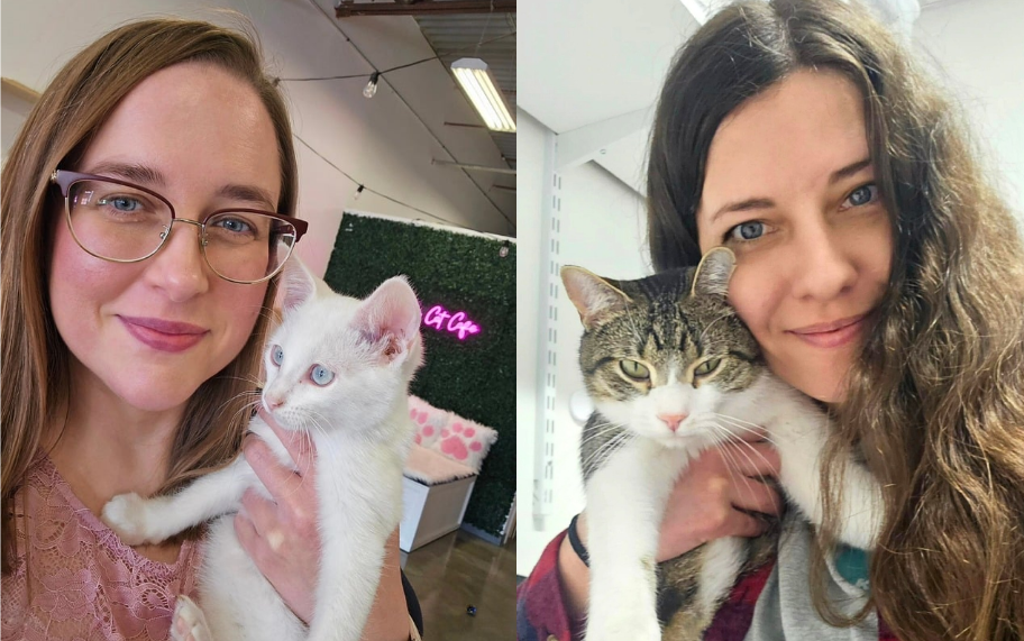
Every bid helps support the mission of Topeka Cat Cafe and Topeka Whisker Warriors, giving rescue cats a safe place to heal, socialize, and find loving homes.

Since opening in July 2024, the cat cafe has helped 741 cats and kittens find their forever families. And with kitten season approaching, the need for support is greater than ever.

Your participation in this auction helps us continue that life-saving work.

So take a few minutes to browse the items and place a bid. You might just walk away with something incredible while helping a cat find their forever home.

👉 Start bidding here:

Thank you for supporting the cats and the community that makes this mission possible.
Wishing you many blessings,

April Liang & Toni Fowler
Owners
The Cat Cafe Auction Is Open! was sent to you on 2026-03-07 02:22:03 UTC by Topeka Cat Cafe
                                                           

### Robert "Tuck" Duncan: A Profile of Service as a Pro Tem Judge in Kansas

In the heart of Topeka, Kansas, Robert E. Duncan II, better known as "Tuck" Duncan, embodies the intersection of private legal practice and public judicial service. As the founder of his own firm, R.E. "Tuck" Duncan, Attorney at Law LLC, Duncan has built a reputation as a dedicated lawyer serving the community. Yet, his contributions extend beyond the courtroom walls of his private practice; he also holds a part-time role as a judge pro tempore—or pro tem judge—in the Shawnee County District Court, part of Kansas's Third Judicial District. This temporary judicial position allows him to assist in alleviating the court's caseload, particularly in sensitive areas like domestic violence cases, while maintaining his independence as a practicing attorney. Duncan's dual roles highlight the vital function of pro tem judges in ensuring the smooth operation of the justice system, all while navigating a compensation structure that reflects the part-time nature of the work.

The duties of a pro tem judge in Kansas are both essential and flexible, designed to support the overburdened district courts. Appointed under Kansas statute K.S.A. 20-310a by the chief judge of the district—subject to budget constraints—these judges step in for good cause, such as during absences, illnesses, or spikes in caseloads when no full-time replacement is available. In the Third Judicial District, which encompasses Shawnee County and Topeka, pro tem judges must meet stringent qualifications outlined in District Court Rule DCR 3.115. These include being licensed and in good standing to practice law in Kansas, possessing at least five years of experience in Shawnee County (or equivalent approved by the court), and adhering to the Kansas Code of Judicial Conduct. Candidates must also exhibit competence, judicial temperament, timeliness, integrity, and independence, with no pending disciplinary complaints against them.

Once appointed, a pro tem judge wields the same authority and powers as a regular district judge for the specific cases or matters assigned. Assignments are determined by the chief judge and can vary widely based on the court's needs, often focusing on specialized dockets to streamline operations. For Duncan, this has meant presiding primarily over domestic violence matters, including hearings for protective orders, initial appearances, and related proceedings. Such roles are crucial in addressing urgent societal issues, providing timely justice in cases that demand sensitivity and expertise. Beyond domestic violence, pro tem judges in the district might handle small claims, limited actions, evictions, or other civil and criminal dockets. However, the position remains inherently part-time and as-needed, allowing individuals like Duncan to balance it with their private practices. This flexibility not only aids the court but also enriches the bench with diverse perspectives from active legal professionals.

Compensation for pro tem judges underscores the temporary and variable nature of the role. Unlike full-time Kansas district court judges, who earn approximately $195,300 annually as of 2026, pro tem judges are paid on a per diem or per-service basis through the state's judicial branch budget. District courts, being state-funded entities, allocate these funds within their limitations, leading to earnings that depend heavily on caseload and district practices. While specific figures for Duncan's judicial income are not publicly detailed, reported averages for pro tem judges in Kansas range from around $3,480 to $61,667 per year, reflecting the part-time commitment across various appointees. This structure ensures that pro tem service remains accessible to qualified attorneys without requiring them to abandon their primary careers, though it also means income can fluctuate based on the volume of assignments.

In essence, Robert "Tuck" Duncan's service as a pro tem judge exemplifies the unsung heroism within the judicial system. By stepping in to handle critical cases like those involving domestic violence, he contributes to a more efficient and equitable court process in Shawnee County. His role, governed by clear duties and modest compensation, underscores the importance of such positions in bridging gaps in judicial resources. For those interested in the intricacies of his assignments or broader court operations, resources like the Shawnee County District Court website offer further insights, reminding us that figures like Duncan play a pivotal part in upholding justice in Kansas.