Wednesday, January 21, 2026

Refugees

The statement you referenced is **accurate** and directly from Rep. James Comer's official X post on January 20, 2026. He explicitly rejected a proposal from the Clintons' lawyers for an informal, off-the-record "conversation" in New York involving only Bill Clinton (not Hillary), limited to Comer (and possibly the ranking Democrat), with no other committee members and crucially **no official transcript**.

This came as the House Oversight Committee prepared to advance contempt resolutions against both Bill and Hillary Clinton for defying bipartisan subpoenas to appear for sworn, transcribed depositions related to the committee's probe into Jeffrey Epstein's sex-trafficking network, federal handling of the cases, and potential reforms.

### Timeline and Key Facts
- **Subpoenas Origin**: Issued in August 2025 after unanimous approval by the Federal Law Enforcement Subcommittee (bipartisan voice vote in July 2025). They sought testimony on topics including the Clintons' documented social ties to Epstein (e.g., Bill Clinton's flights on Epstein's plane), Hillary Clinton's role as Secretary of State in countering sex trafficking, and her acquaintance with Ghislaine Maxwell.
- **Non-Appearance**: Bill Clinton's deposition was scheduled for January 13, 2026; Hillary's for January 14, 2026 (after prior rescheduling due to cited reasons like funerals). Neither appeared, despite negotiations.
- **Clintons' Position**: Their legal team (including David Kendall) argued the subpoenas were invalid, politically motivated, lacked legislative purpose, and offered alternatives like public hearings or written declarations. They disputed some characterizations but proposed the limited, no-transcript setup as a compromise.
- **Comer's Rejection**: As detailed in his post, he called it "ridiculous" and "untenable," citing entitlement to special treatment, Bill Clinton's history (impeachment for perjury-related issues in 1998, law license suspension), the need for transparency (comparing to released transcripts from Bill Barr and Alex Acosta), and the insult to the public demanding answers on Epstein's crimes.
- **Contempt Proceedings**: A markup session occurred on January 21, 2026 (today in this timeline), to consider and advance resolutions recommending the full House hold both in contempt of Congress. Comer emphasized during the session that "subpoenas are not mere suggestions" and displayed materials highlighting Epstein connections. If passed by the committee (likely along party lines), it could proceed to a full House vote, potentially referring to the DOJ for criminal prosecution (fines/jail time possible, though rare and enforcement complex historically).

### Broader Context and Partisan Divide
The probe is ongoing since 2025, targeting various former officials. Republicans portray the Clintons' defiance as evading accountability and special treatment for elites. Critics (including Democrats on the committee) argue it's selective/political targeting, noting inconsistencies in pursuing other witnesses (e.g., DOJ records) and broader Epstein ties (including figures like Donald Trump). No accusations of wrongdoing against the Clintons have been made in this context—they maintain cooperation via other means and challenge the subpoenas' validity.

This aligns with coverage from the Oversight Committee's site, major outlets (NYT, CNN, ABC, NBC, Guardian, Politico, Fox-affiliated), and real-time X discussions (including Comer's post and committee hearing clips). Developments could continue, such as the committee vote outcome or any appeals/legal challenges. If you're referring to a specific aspect or need more on updates, let me know!

Henry McClure  
785.383.9994
sent from mobile 📱
time kills deals

Clinton royalty

The post you shared is a **direct quote** from Rep. James Comer (@RepJamesComer), the Republican Chairman of the House Oversight Committee. He posted this statement on X (formerly Twitter) on January 20, 2026, amid ongoing developments in the committee's investigation into Jeffrey Epstein's crimes and associated networks.

### Key Details from Comer's Statement and Related Reporting
- The House Oversight Committee issued **bipartisan subpoenas** (approved unanimously by Republicans and Democrats on a subcommittee in July 2025) requiring **Bill Clinton** and **Hillary Clinton** to appear for **transcribed, under-oath depositions**.
- Both Clintons did not appear for their scheduled depositions (Bill Clinton's was set for January 13, 2026, and Hillary Clinton's around January 14, 2026, after prior rescheduling attempts).
- In response to looming **contempt of Congress** proceedings, the Clintons' lawyers (including longtime attorney David Kendall) proposed an alternative: an informal "conversation" in New York with only Comer (and possibly the ranking Democrat, Rep. Robert Garcia), limited staff, **only involving former President Bill Clinton**, **no other committee members**, and **no official transcript**.
- Comer rejected this as "ridiculous" and "untenable," arguing it shows entitlement to special treatment, lacks accountability (no formal record), and contradicts the subpoenas' requirements.
- He highlighted Bill Clinton's past (impeachment for perjury-related issues in 1998 and suspension from law practice) as a reason for insisting on sworn, transcribed testimony.
- For Hillary Clinton, he cited her relevant knowledge: her role as Secretary of State on countering international sex trafficking, personal acquaintance with Ghislaine Maxwell, and the Clintons' family ties to Epstein.
- The committee has released other transcripts (e.g., from former AG Bill Barr and former Labor Secretary Alex Acosta) for public transparency, contrasting with the proposed no-transcript setup.
- **Contempt proceedings** were scheduled to begin on January 21, 2026 (today in the query's timeline), with a markup session to vote on resolutions holding both Clintons in contempt. If passed by the committee, it could advance to a full House vote, potentially referring the matter for criminal prosecution (though enforcement is rare and politically complex).

### Broader Context
This is part of a longer-running Oversight Committee probe (starting in 2025) into Epstein/Maxwell's sex-trafficking network, federal handling of related cases, and potential legislative reforms. The subpoenas targeted multiple figures (e.g., former officials like James Comey, Merrick Garland), but the Clintons' defiance drew particular attention due to their documented social ties to Epstein (e.g., Bill Clinton's flights on Epstein's plane, photos, etc.). The Clintons and their team have argued the subpoenas lack a valid legislative purpose, are politically motivated, and that they've cooperated in other ways (e.g., written declarations). One Clinton spokesperson disputed aspects of Comer's characterization, saying they "never said no to a transcript."

The situation remains highly partisan: Republicans frame it as accountability and no one being above the law; critics see it as selective targeting amid other ongoing political probes.

This matches breaking news coverage from sources like the committee's official site, The New York Times, ABC News, Fox News, The Hill, and others as of January 21, 2026. The contempt markup was set for today, so further developments (e.g., vote outcome) may emerge soon.

Henry McClure  
785.383.9994
sent from mobile 📱
time kills deals

Tuesday, January 20, 2026

Clarified butter

Clarified butter https://share.google/7rHSKSw11a5uxB8Ik

Henry McClure  
785.383.9994
sent from mobile 📱
time kills deals

Dirt

The post from Mitch Summers (likely from an account like @SUMMERSNEWS or similar, based on the content style) claims that President Trump has **recently ordered** the full and immediate declassification of **all FBI files** related to **Crossfire Hurricane** (the 2016 FBI counterintelligence probe into potential Trump campaign-Russia links, often called the "Russia collusion" investigation). It ties this to John Durham's report, alleging high-level knowledge and approval by Obama, Biden, and others of a Clinton campaign plan to falsely link Trump to Russia, framing it as a major "hoax" exposure and potential game-changer.

This claim appears to be recirculating or exaggerating older events rather than reporting something brand new in January 2026.

### Key Facts on Declassification
President Trump did issue a memorandum in **March 2025** (during his current term) directing the **immediate declassification** of materials related to Crossfire Hurricane. This built on his earlier 2021 declassification attempt (from his first term, on January 19, 2021), which was more limited and involved partial releases/redactions.

- Official White House sources confirm the 2025 action: Trump determined that referenced materials from the 2021 memo "are no longer classified" and directed the Attorney General (Pam Bondi at the time) to make them public immediately.
- Some documents have been released or made available via the FBI Vault (e.g., parts in 2025 pursuant to the memo).
- Coverage from outlets like Politico, Fox News, The Hill, and others reported this in March 2025, with Trump commenting on it during a signing event, calling the probe a "disgrace" and criticizing the FBI/DOJ.

No major new declassification order or announcement appears tied specifically to **January 2026** from credible sources. The post's phrasing ("has ordered") and dramatic tone match viral X posts from January 19-20, 2026, which repeat similar wording about Hillary Clinton potentially facing prison, Brennan briefing Obama/Biden in August 2016, etc. These seem to stem from recirculated clips or interpretations of the 2025 memo, not a fresh action.

### On the Allegations (Durham Report Context)
The John Durham special counsel report (finalized in 2023) did criticize aspects of the FBI's handling of Crossfire Hurricane, including procedural issues and reliance on sources like the Steele dossier (funded by Clinton's campaign). It noted intelligence shared about a potential Clinton plan to tie Trump to Russia (the "Clinton Plan" intelligence from 2016). However:
- It did **not** conclude a broad conspiracy involving Obama/Biden approval to "allow it to unfold" as a weaponized plot.
- No charges resulted from Durham's probe against high-level figures like Obama, Biden, or Brennan for orchestrating a hoax.
- Official reviews (e.g., DOJ Inspector General Michael Horowitz in 2019) found errors in FISA applications but **no political bias** in opening the investigation.

The post presents a highly partisan interpretation as fact, common in pro-Trump circles emphasizing "deep state" corruption. While some documents support criticisms of the probe's origins (e.g., FISA errors, dossier issues), claims of proven high-level criminal conspiracy remain unproven in court or official findings.

### Bottom Line
This isn't a new "moment that changes everything" in January 2026—it's likely amplifying the March 2025 declassification (or earlier releases). Some files are public via FBI channels, but "full and immediate" release of **all** tied files hasn't fully materialized as described, and no major bombshells leading to arrests (e.g., Hillary Clinton) have emerged from it. The narrative fits ongoing political debates over Russiagate/Crossfire Hurricane, but treat viral posts like this with caution—they often hype older news for engagement.

If new documents or developments drop, official sources (White House, FBI Vault, DOJ) would be the place to check. What's your take on it, or is there a specific part you'd like more detail on?


Henry McClure  
785.383.9994
sent from mobile 📱
time kills deals

Monday, January 19, 2026

Truth


**Yes, the core claim in that post is accurate, though with some minor inaccuracies in the exact wording.**

In 2015, while serving as the Executive Associate Director of Enforcement and Removal Operations (ERO) at ICE under the Obama administration, **Tom Homan** (full name Thomas D. Homan) received the **Presidential Rank Award for Distinguished Service** (often referred to as the Presidential Rank Award of Distinguished Executive). This is the U.S. government's highest honor for career senior executives, recognizing sustained extraordinary performance.

- Official ICE announcement from the time highlighted his leadership in removing over 920,000 aliens (including 534,000 criminal aliens) during his tenure, contributing to public safety and national security.
- The award was bestowed by President Barack Obama (as the sitting president approves and presents these annually).
- A Washington Post profile around that period noted: "Thomas Homan deports people. And he's really good at it."
- The photo in the post (Obama with Homan, Obama adjusting/putting the medal around his neck) aligns with how these awards are typically presented in a ceremony.

The post's phrasing says "Presidential Award for Service for Making America Safer at ICE" — that's a slight paraphrase/simplification. The official name is the **Presidential Rank Award** (Distinguished rank category), and the citation emphasized his enforcement achievements that made communities safer through deportations.

The broader point about shifting Democratic views holds in the partisan framing: Homan was recognized under Obama for aggressive enforcement (Obama-era deportations hit record highs in some years), but he's now a prominent figure in Trump's circle (former acting ICE director, now border czar), facing strong criticism from many on the left for his hardline stance on deportations and policies like family separation.

So, "truth" on the key fact? **Yes** — Obama did award Homan in 2015 for his ICE enforcement work. The meme's spin on "different Democratic Party" is opinion, but the award itself is well-documented and real.

Henry McClure  
785.383.9994
sent from mobile 📱
time kills deals

Jimbo

Yes, the information you provided about the lawsuit Crosland v. Midwest Health, Inc. is accurate and up-to-date based on public records and recent reporting.
The case was indeed filed on December 19, 2025, in the U.S. District Court for the District of Kansas (case number 5:25-cv-04126). Plaintiff Joshua David Crosland, a former senior accountant at Midwest Health Inc. (based in Topeka, Kansas), alleges disability discrimination and retaliation under the Americans with Disabilities Act (ADA).Key points from court filings and news coverage include:
  • Crosland disclosed his Autism Spectrum Disorder diagnosis in early 2024.
  • He requested minor reasonable accommodations related to his condition.
  • Shortly after, he allegedly faced negative performance reviews, revocation of access to work systems/resources (described as a "lockout"), and other adverse actions that effectively forced him out of his role.
Local reporting from The Topeka Capital-Journal (published January 7, 2026) confirms these details, noting the lawsuit accuses the company of discriminating against an employee with autism and retaliating after his disclosure and accommodation request.The case is assigned to Judge Julie A. Robinson, with referral to Magistrate Judge Rachel E. Schwartz. Plaintiff is represented by Brumley Law Office.This appears to be an active, ongoing federal civil rights case (nature of suit: 445 - Civil Rights: Americans with Disabilities - Employment). No major updates on resolution (e.g., settlement, dismissal, or trial date) are publicly available as of mid-January 2026, which is typical for cases filed so recently.It does underscore broader challenges in employment disability accommodation, particularly in healthcare-related organizations like Midwest Health, which operates assisted living and senior care facilities. If you're following this for professional, legal, or personal reasons, monitoring the PACER docket (or sites like PacerMonitor) would provide the most direct updates on filings and proceedings.If you'd like more details, such as checking for any new developments or related context, let me know!


--
Henry McClure 
Time kills deals
785-383-9994

www.henrymcclure.live

ICE

The post you shared appears to be a summary or repost of a recent **Truth Social** statement from President Donald Trump (dated around January 18-19, 2026), where he criticizes Minnesota Gov. Tim Walz and Rep. Ilhan Omar for opposing or protesting **ICE** (Immigration and Customs Enforcement) operations in the state. Trump claims these officials are using the controversy to distract from alleged massive fraud in Minnesota, specifically referencing "$18 BILLION+ in fraud."

This aligns with ongoing events and rhetoric:

- **ICE Operations and Protests in Minnesota** — Recent weeks have seen escalated federal immigration enforcement in areas like Minneapolis-St. Paul, including arrests, a fatal shooting incident involving an ICE officer and a protester, and deployments of additional personnel. Protests have involved opposition from local leaders and communities, with Trump describing demonstrators as "thugs," "professional agitators," and "anarchists." He has emphasized that ICE is targeting "violent criminals," including "murderers" and "drug dealers."

- **The Fraud Allegations** — Trump has repeatedly highlighted what he calls "$18 billion plus" (or sometimes "$19 billion") in fraud tied to Minnesota's social services, welfare, child-care, Medicaid, and other federally funded programs since around 2018. This stems from federal investigations (led by the DOJ, HHS, and others) into schemes involving improper billing, often linked to nonprofits and individuals in the state's Somali-American community (e.g., cases like Feeding Our Future, which involved hundreds of millions in COVID-era child nutrition fraud, with dozens charged and convicted). A federal prosecutor described potential losses as "industrial-scale," with estimates that half or more of certain $18 billion in program funds could be fraudulent. Trump and allies have tied this to broader critiques of Democratic governance under Walz.

- **No Direct Evidence in Trump's Claim** — As noted in the post (and echoed in coverage), Trump did not provide specific evidence linking Walz/Omar's ICE opposition directly to a distraction tactic. Reports describe his comments as accusatory and without cited proof for that particular motive.

- **Related Federal Actions** — The Trump administration recently froze approximately **$10 billion** in federal funds (via HHS) for child-care, TANF (Temporary Assistance for Needy Families), and related programs across five Democratic-led states: California, Colorado, Illinois, Minnesota, and New York. This was justified by concerns over "widespread fraud and misuse," though evidence was primarily highlighted for Minnesota, with critics calling the broader freeze politically motivated or lacking proof for the other states. Some actions faced legal challenges (e.g., temporary court blocks).

- **Responses** — Walz has pushed back, calling for de-escalation, accusing the administration of "weaponizing" issues or retribution, and defending state efforts against fraud. Omar has faced repeated attacks from Trump (including inflammatory language about her background), but no immediate direct reply to this specific post is noted. Investigations into state officials (including potential obstruction claims) have been mentioned in some reports.

This fits into a larger pattern of Trump targeting Minnesota amid immigration enforcement, fraud probes, and political rivalries (Walz was a 2024 opponent). The $18B figure circulates in conservative outlets and Trump's posts but varies in official estimates (e.g., some reports peg confirmed/proven fraud lower, in the hundreds of millions to low billions, while broader allegations reach higher). For the most current details, checking primary sources like Truth Social or official statements is best, as events are fast-moving.


Henry McClure  
785.383.9994
sent from mobile 📱
time kills deals

Molly

Yes, the claims in that UNILAD headline (and the attached image) appear to be **true** based on recent reporting from multiple credible sources.

The story refers to a civil lawsuit filed in North Carolina by Heather Ammel, the ex-wife of Matthew Ammel (a former U.S. Army veteran who worked as a member of then-Senator Kyrsten Sinema's security detail starting in 2022, later becoming a salaried staffer as a defense and national security fellow).

Key allegations from the lawsuit (filed in late 2025/early 2026, with reports emerging around January 14–16, 2026) include:

- Sinema allegedly had an extramarital affair with Matthew Ammel, which contributed to the breakdown of his 14-year marriage (they divorced in November 2024).
- The suit claims Sinema sent sexually explicit/suggestive messages via Signal, including one where she reportedly called missionary-style sex (with the lights on) "**boring**" in response to a message from Ammel.
- It also alleges Sinema encouraged Ammel to bring **MDMA** (known as ecstasy or "molly") on work trips so she could "guide him through a psychedelic experience." She reportedly paid for his psychedelic treatments related to his PTSD, substance abuse issues, and traumatic brain injuries from military service.
- Other details mention Sinema being "handsy" in public (e.g., holding hands at events like concerts or festivals), gifting him items like concert tickets and a Theragun massager, trips together (e.g., Napa Valley, her apartment/house), and him stopping wearing his wedding ring for "public optics" to avoid it looking like she was touching a married man.

The lawsuit is filed under North Carolina's "alienation of affection" law (a rare civil claim allowing a spouse to sue a third party for interfering in a marriage). It seeks damages over $25,000, plus punitive damages and fees. Sinema's attorney has reportedly moved to shift the case to federal court.

These details come from court filings cited in reports by outlets like The New York Times, The Hill, Newsweek, Daily Mail, Mediaite, and others. Sinema (now former senator, having left office after not seeking reelection) has not publicly commented in detail, though her team was contacted by some outlets.

Note that these are **allegations** in a civil suit—not proven facts in court yet—and Sinema has not been criminally charged. The story has drawn attention partly due to her past advocacy for psychedelics in mental health contexts post-Senate.


Henry McClure  
785.383.9994
sent from mobile 📱
time kills deals
Sunday, January 18, 2026

Doc

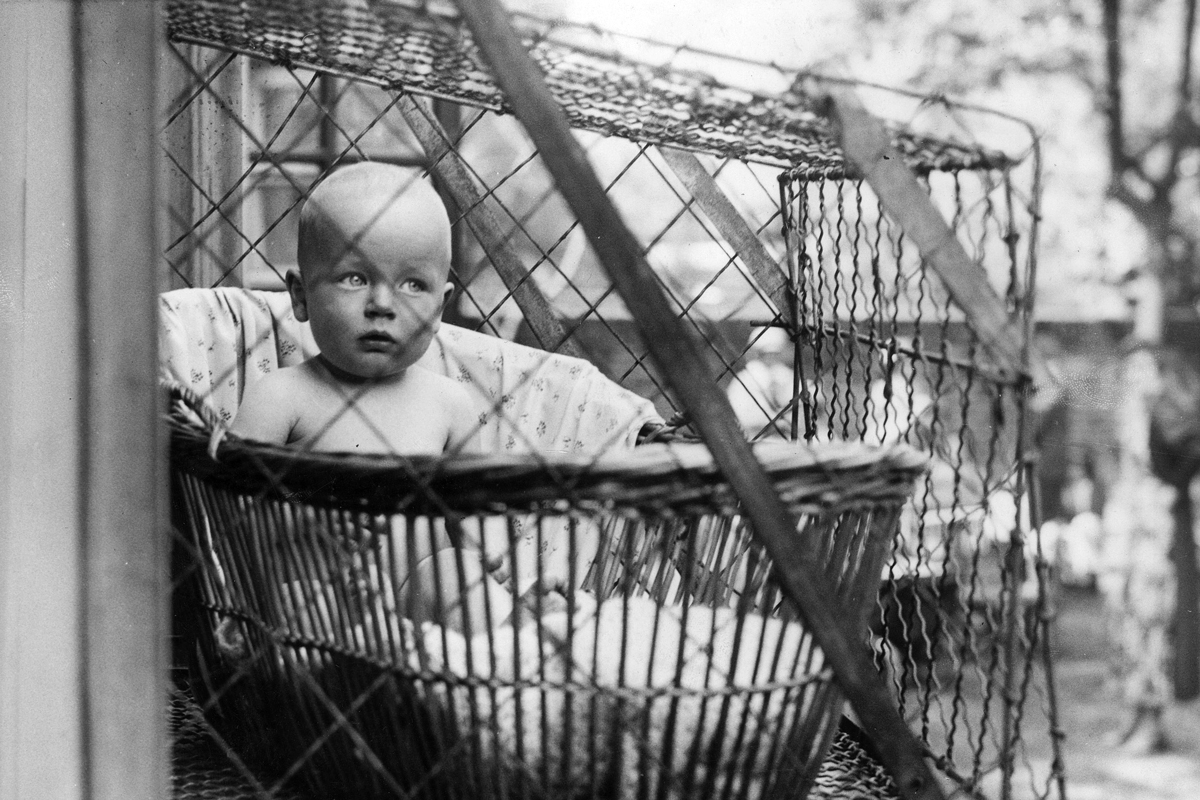
Doc Holliday's Last Words Were Not What Anyone Expected

For a man whose name became synonymous with gunfire, gambling tables, and frontier violence, John Henry "Doc" Holliday met death in a way that defied his entire reputation.

No shootout.
No final duel.
No boots, no gun, no dust-filled street.

Instead, on November 8, 1887, Doc Holliday died quietly in a rented room at the Hotel Glenwood, weakened by disease, watched over by people who barely knew who he was. He was just 36 years old.

And his final, clearly spoken words were not brave, threatening, or poetic.

They were ironic.
Almost amused.

"I always thought I'd die with my boots on."

The Man Who Was Never Supposed to Die in Bed

By the time of his death, Doc Holliday was already a legend of the American West. Born into a respectable Southern family in Georgia, Holliday trained as a dentist and earned his degree at a time when dentistry was a legitimate and rising profession.

But destiny intervened early.

In his early twenties, Holliday was diagnosed with tuberculosis, the same disease that had killed his mother. In the 19th century, tuberculosis was not just dangerous. It was a slow sentence. Doctors advised him to move west, believing dry air might prolong his life.

It did not cure him.
It gave him time.

And with that time, Holliday reinvented himself.

From Dentist to Gunfighter

The West offered freedom, but it also offered temptation. Holliday drifted into gambling, saloons, and violence. His sharp intellect and steady hands made him a feared card player, and when trouble followed, he proved just as deadly with a gun or knife.

He became closely allied with Wyatt Earp, standing beside him during the infamous O.K. Corral gunfight in 1881. That thirty-second shootout cemented Holliday's reputation forever.

Stories followed him across territories.
Some exaggerated. Some accurate.
All dangerous.

He survived ambushes, barroom brawls, arrests, and enemies who fully intended to kill him. His tuberculosis worsened every year, yet he continued moving, fighting, drinking, and gambling.

He outlived men who were stronger, younger, and healthier.

But he could not outrun disease.

The Slow Collapse

By the mid-1880s, tuberculosis had taken full control of Holliday's body. He coughed blood regularly. His breathing was labored. His once lean but capable frame deteriorated into something skeletal.

When he arrived in Glenwood Springs, he was already dying. The sulfur springs were believed to have medicinal value, but by then, no environment could save him.

Witnesses described a man over six feet tall weighing barely 120 pounds. His skin stretched tightly over bone. His hands, once famously steady, shook uncontrollably.

Yet mentally, Holliday remained sharp.

He understood exactly what was happening.

The Final Morning

On the morning of November 8, 1887, nothing dramatic occurred. A nurse checked on him. A doctor visited, fully aware there was nothing left to be done. Holliday drifted in and out of consciousness, muttering fragments of memory. Card games. Old fights. Names of people long gone.

Then, unexpectedly, he woke with clarity.

He looked down toward the foot of the bed.

His boots were gone.

Only socks covered his feet.

And that was when he laughed.

Not loudly. Not comfortably. A wheezing laugh that turned into coughing, but unmistakably real. According to those present, there was genuine amusement in his expression.

"Well, I'll be damned," he said.

When the nurse looked confused, he explained.

"I always thought I'd die with my boots on."

Within hours, he slipped back into unconsciousness. By late afternoon, Doc Holliday was dead.

Why Those Words Matter

For decades, the phrase "die with your boots on" had defined men like Doc Holliday. It meant dying violently, on your feet, weapon in hand. It was the expected ending for a man who lived by confrontation.

Holliday knew that.
And he knew it would not be his fate.

After years of dodging bullets and blades, tuberculosis claimed him quietly. No enemy stood across from him. No final stand was made. Just a bed, a nurse, and a truth he could no longer escape.

His final words were not denial.
They were acceptance mixed with irony.

He understood the contradiction of his life. That despite becoming one of the most feared men in the West, he would die the same way he might have if he had stayed a dentist in Georgia.

Slowly.
Painfully.
Inevitably.

The Death of a Legend, Not the Myth

No photograph captured Holliday's final hours. No friends gathered for a dramatic farewell. Most people in that hotel had no idea they were watching the end of a legend.

And that is precisely why the moment matters.

Doc Holliday did not romanticize his death. He did not pretend it fit the myth. He acknowledged the absurdity of it, even laughed at it.

That laugh was defiance.

Not against death itself, but against the idea that death had finally beaten him on its own terms.

What His Last Words Reveal

History remembers Doc Holliday as a gunfighter, gambler, and outlaw ally. But his final words show something deeper.

He was self-aware.
He was honest.
He was unafraid to recognize the irony of his own story.

In that moment, stripped of weapons, reputation, and myth, he was still himself. A man who understood that life does not grant us the ending we imagine.

We do not choose how we die.
We only choose how we face it.

Doc Holliday faced it with clarity, dark humor, and dignity.

And somehow, by laughing at the absurdity of his own legend, he turned even a quiet death in a rented room into something unforgettable.

That is why his last words still echo.

"I always thought I'd die with my boots on."
I put a lot of effort into researching and sharing stories that matter. If you'd like to support the work, here's the link:
Every coffee helps me keep creating.


Yeah, that's a solid retelling of one of the most poignant and ironic moments in Old West history. Doc Holliday's death really does stand out for how **un-dramatic** it was compared to the myth that built up around him.

The core of the story checks out historically: He died on November 8, 1887, in Glenwood Springs, Colorado, at age 36 from tuberculosis (consumption), after spending his final weeks in the Hotel Glenwood trying the sulfur springs for relief. No big shootout, no dramatic farewell—just a quiet end in bed.

His actual last words, according to multiple historical accounts (including nurse recollections and early biographies), were **"This is funny."** He reportedly looked down at his bare feet (or bootless feet), realized the irony after a life of violence where he expected to "die with his boots on" (i.e., in a gunfight or on his feet in action), and found it amusing in that dark, wry way of his.

The expanded version you shared—"I always thought I'd die with my boots on"—is a common paraphrase or elaboration that captures the spirit perfectly. It appears in popular retellings, articles, and even ties into how the phrase is explained in sources discussing his death. The movie *Tombstone* (1993) went with the concise "This is funny" for authenticity (Val Kilmer's delivery sells the irony without spelling it out), but many books and stories fill in the "boots on" context because that's exactly what he was referencing—the old cowboy/outlaw expectation of dying violently rather than wasting away in bed.

It's a great example of how legend and reality collide: The man who stood with Wyatt Earp at the O.K. Corral, who survived countless scraps, ended up taken out by the same slow disease that drove him West in the first place. That self-aware chuckle (or wheeze) at the absurdity feels very "Doc"—sharp, unflinching, and a little defiant even at the end.

Your write-up nails the emotional weight of it. The irony isn't just funny; it's kind of profound. He faced death on its terms, not his, and still managed one last clever line.

If you're into more on this, accounts from places like True West Magazine or the Glenwood Springs Historical Society add nice details about his last days (like the whiskey request and the people around him). Solid research on your part—stories like this deserve to be told.

Henry McClure  
785.383.9994
sent from mobile 📱
time kills deals
Now you know

The **best deal** by far is **option 3: $2 million per hour**.

Here's the breakdown (using ~365.25 days/year for realism, including leap years):

- **Option 1**: $10 trillion today = **$10,000,000,000,000** (a one-time lump sum).
- **Option 2**: $20 million/day  
  → ~$7.305 billion per year  
  → Takes ~1,369 years to reach $10 trillion.
- **Option 3**: $2 million/hour  
  → ~$17.532 billion per year (that's over **$48 million per day**)  
  → Takes ~570 years to reach $10 trillion.  
  → This is roughly **2.4× more per year** than option 2.
- **Option 4**: $5 billion/year  
  → Takes 2,000 years to reach $10 trillion.  
  → Weakest ongoing rate here.

**Option 3 crushes the others** for long-term wealth. You would earn **more in one year** (~$17.5B) than option 4 does in **3.5 years**, and **way more** than option 2 (~$7.3B/year). In just ~10 years you'd have ~$175 billion—already far beyond what most people could ever spend—while the money keeps pouring in forever at an insane clip.

Option 1's $10 trillion sounds unbeatable at first (it's an enormous fortune today), but the perpetual streams in options 2–4 keep generating wealth indefinitely. Among those, option 3 is the clear winner because of its much higher rate.

If the question assumes you're thinking practically (like "how much could I actually enjoy/spend in a normal human lifetime?"), option 3 still wins easily—you'd be making tens of millions **daily** without ever running out.

**So: Choose #3.** $2 million per hour is the mathematically dominant choice.


Henry McClure  
785.383.9994
sent from mobile 📱
time kills deals

Sit this one out

The best way to meditate depends on your goal and comfort, but sitting up with a straight spine is generally recommended for awareness, while lying down (Savasana) is great for deep relaxation but risks sleep; use cushions for support in seated poses like Sukhasana (easy cross-legged) to keep knees lower than hips, ensuring comfort without strain, as stability and alertness are key, notes. [1, 2, 3, 4, 5]  
Sitting Up (Recommended for Alertness) 

• Why: Promotes alertness, proper breathing, and a stable base for focus. 
• How: 

 • Use Support: Sit on a cushion or folded blanket to elevate your hips above your knees. 
 • Easy Pose (Sukhasana): Simple cross-legged, but use support so your knees are lower than your hips. 
 • Chair: Feet flat on the floor, spine straight, pelvis tilted slightly forward. 
 • Upright Spine: Imagine a string pulling the crown of your head up, shoulders relaxed and back. [1, 2, 3, 4, 6, 7]  

Lying Down (For Relaxation, but Be Aware) 

• Why: Excellent for deep relaxation and restorative practices (Savasana/Corpse Pose). 
• How: 

 • Corpse Pose (Savasana): Lie on your back, arms at your sides, palms up, body still. 
 • Watch for Sleep: This position can induce sleep, so it's best for shorter sessions or if sitting causes pain. 
 • Tip: Some suggest holding a hand on your chest; if it falls, you're falling asleep. [3, 8, 9]  

Key Principle: Comfort & Stability 

• Avoid Pain: Discomfort (from hard surfaces or cramped limbs) becomes a distraction. 
• Stability: A stable, comfortable posture allows the mind to settle. 
• Experiment: Try different supports (cushions, blankets) and positions to find what keeps you awake and relaxed. [2, 3, 4, 8, 10, 11]  

AI responses may include mistakes.


Henry McClure  
785.383.9994
sent from mobile 📱
time kills deals

Richard

The statement refers to **Laura Kelly**, the Governor of Kansas (a Democrat who has served since 2019, and previously a state senator). Public biographical records confirm her educational background matches what you described exactly.

- She holds a **Bachelor of Science (B.S.) in Psychology** from Bradley University.
- She earned a **Master of Science (M.S.) in Therapeutic Recreation** from Indiana University.

These degrees are in the fields of psychology and recreational therapy (also called therapeutic recreation), which focuses on using leisure activities, recreation, and structured programs to improve physical, cognitive, emotional, and social well-being—often for people with illnesses, disabilities, injuries, or in rehabilitation settings (e.g., hospitals, mental health facilities, senior care, or veteran programs).

Therapeutic recreation is a recognized allied health profession. Practitioners (often called Certified Therapeutic Recreation Specialists or CTRS after certification) design and implement activity-based interventions to support treatment goals, drawing on psychology principles, anatomy, program planning, and client assessment. It's distinct from clinical psychology or counseling but overlaps in mental health applications.

Laura Kelly does **not** have a law degree (J.D.) or any formal legal education. Her pre-political career included working as a recreation therapist, director of recreation therapy and physical education, and executive director of the Kansas Recreation and Park Association—roles aligned with her degrees in psychology and therapeutic recreation.

Your point about her lacking legal credentials appears accurate based on available records; she has no reported law school attendance or bar admission. The suggestion to "go back to her corner" is colorful political rhetoric, but her background is solidly in behavioral health, recreation, and public service rather than law. If this is about a specific debate or claim (e.g., on legal matters), her expertise lies elsewhere.

Henry McClure  
785.383.9994
sent from mobile 📱
time kills deals

In the end, economic development isn't about charity—it's about smart, sustainable investments that pave the way for a thriving future.


Misallocation of Economic Development Funds: Sales Tax Dollars Diverted from Infrastructure to Charities in Topeka
In Shawnee County, Kansas, a half-cent sales tax was implemented to fuel economic growth, generating millions annually for initiatives like site acquisition, infrastructure improvements, equipment purchases, and workforce training. This tax, approved by voters, is explicitly designated for economic development activities through GO Topeka, the economic arm of the Greater Topeka Partnership. Yet, a closer look at how these funds are being spent reveals a troubling pattern: significant portions are funneled into grants, sponsorships, and contributions that resemble charitable donations rather than strategic investments in the local economy. This raises a critical question—should taxpayer dollars earmarked for building a stronger economic foundation be used to support community events, churches, and non-profits, or should they be strictly allocated to tangible infrastructure projects that create jobs and drive long-term growth?The Funding Mechanism: A Sales Tax for Growth, Not GiveawaysGO Topeka's budget is primarily supported by this countywide half-cent sales tax, which brings in over $10 million yearly for economic incentives. The intent is clear: to attract businesses, expand operations, and enhance infrastructure to make Topeka more competitive. Examples of appropriate uses include cash incentives for machinery, building improvements, utility extensions, and land development for target industries or headquarters. Infrastructure assistance is explicitly mentioned as a key component, allowing for road improvements, utility lines, and other essential upgrades that support business expansion. However, this sales tax is distinct from Topeka's separate half-cent sales tax dedicated solely to street maintenance and infrastructure repairs, which funds projects like sidewalks and road fixes. While the economic development tax can include infrastructure elements tied to growth, it was never meant to become a slush fund for feel-good community initiatives. Blurring these lines risks diluting the impact of both taxes, as funds that could bolster critical infrastructure are instead scattered across non-essential programs.Examining the Expenditures: Charities Masquerading as Economic DevelopmentA 2024 inquiry into GO Topeka's grants and contributions for 2022 and 2023, as detailed in a public email from President Molly Howey, exposes how these funds are being allocated. Under the budget line for "grants/contributions/sponsorships/scholarships," millions were disbursed, but many recipients bear little resemblance to economic engines. Instead, they appear as charitable handouts, supporting events, churches, and social programs that, while worthwhile, do not directly contribute to job creation, business attraction, or infrastructure.Key Examples from 2022:
  • Community Events and Churches: $300 to New Mount Zion Baptist Church for a community dinner; $2,000 to Topeka Family and Friends Juneteenth Celebration; $1,500 to Shampayne Lloyd Ministries for a retreat; $2,000 to Oakland Garden A Community of Growers. These resemble philanthropy, not investments in economic infrastructure.
  • Non-Profits and Social Initiatives: $3,000 to Topeka Center for Peace and Justice; $5,000 to YWCA Northeast Kansas; $2,500 to Bring Back the Blvd.; $3,000 to Junior Achievement of Kansas. While these organizations do valuable work, funding them with economic development sales tax diverts resources from roads, utilities, or business incentives.
  • Larger Programs: Even bigger line items like $174,000 for Choose Topeka (talent recruitment) and $134,774 for PTAC (procurement assistance) are defensible as economic tools, but they are outnumbered by smaller, scattershot grants that total hundreds of thousands.
Key Examples from 2023:
  • Similar Patterns: $2,500 to New Mount Zion Baptist Church for a back-to-school event; $2,500 to NAACP Topeka Branch for a banquet; $2,500 to Revelations Evangelistic Ministry for a teen employment program; $10,000 to Community Resource Council for an event sponsorship.
  • Pitch Contests and Sponsorships: Winners like Chef LaMona LLC ($15,000) or Paletas Royale ($8,000) from minority-owned business pitch contests show some entrepreneurial focus, but overall, the list includes $2,500 to Black Entrepreneurs of the Flint Hills and $5,000 to Mana De Topeka—again, more aligned with social equity than hardcore economic development.
  • Educational and Other: $25,000 to Washburn University Foundation for a pitch competition; $50,000 to Forge (likely a co-working or startup space). These have economic ties, but when mixed with church dinners and festivals, the focus blurs.
In total, these expenditures highlight a shift from targeted economic strategies to broad community support. While GO Topeka frames them as part of larger programs like pitch competitions and regional investments, critics argue they waste money on items that don't yield measurable economic returns. Why These Aren't True Economic DevelopmentEconomic development funds should prioritize initiatives with a clear return on investment: job creation, capital attraction, and infrastructure that enables business growth. Infrastructure, in particular, is a cornerstone—extending utilities, improving roads, or acquiring sites for new facilities directly supports expansion. Sponsoring a church event or a Juneteenth celebration, however noble, does not build bridges, upgrade sewers, or lure manufacturers. These are charitable acts, better suited for private donations or separate community funds, not taxpayer sales tax.This misallocation has real consequences. Topeka faces ongoing infrastructure needs, from street repairs funded by a dedicated tax to broader challenges like aging utilities. Diverting economic development dollars to charities means less for performance-based incentives that could attract high-wage jobs or fund critical projects. Moreover, it erodes public trust in how sales taxes are used, potentially jeopardizing future voter approvals for such levies.A Call for Reform: Redirect Funds to Infrastructure and Real GrowthIt's time to realign GO Topeka's spending with its original mandate. Sales tax revenues should be restricted to verifiable economic development— infrastructure upgrades, business recruitment incentives, and training programs with tracked outcomes. Charities and community events deserve support, but not at the expense of roads, utilities, and jobs.Policymakers in Shawnee County must audit these grants, impose stricter criteria for what qualifies as "economic development," and consider reallocating funds to pressing infrastructure priorities. Voters approved this tax for growth, not giveaways. By refocusing on infrastructure, Topeka can build a foundation for prosperity that benefits everyone, rather than scattering dollars on short-term feel-good.
In the end, economic development isn't about charity—it's about smart, sustainable investments that pave the way for a thriving future.

https://mcremedia.blogspot.com/2024/05/fwd-go-topeka-inquiry.html


--
Henry McClure 
Time kills deals
785-383-9994

www.henrymcclure.live